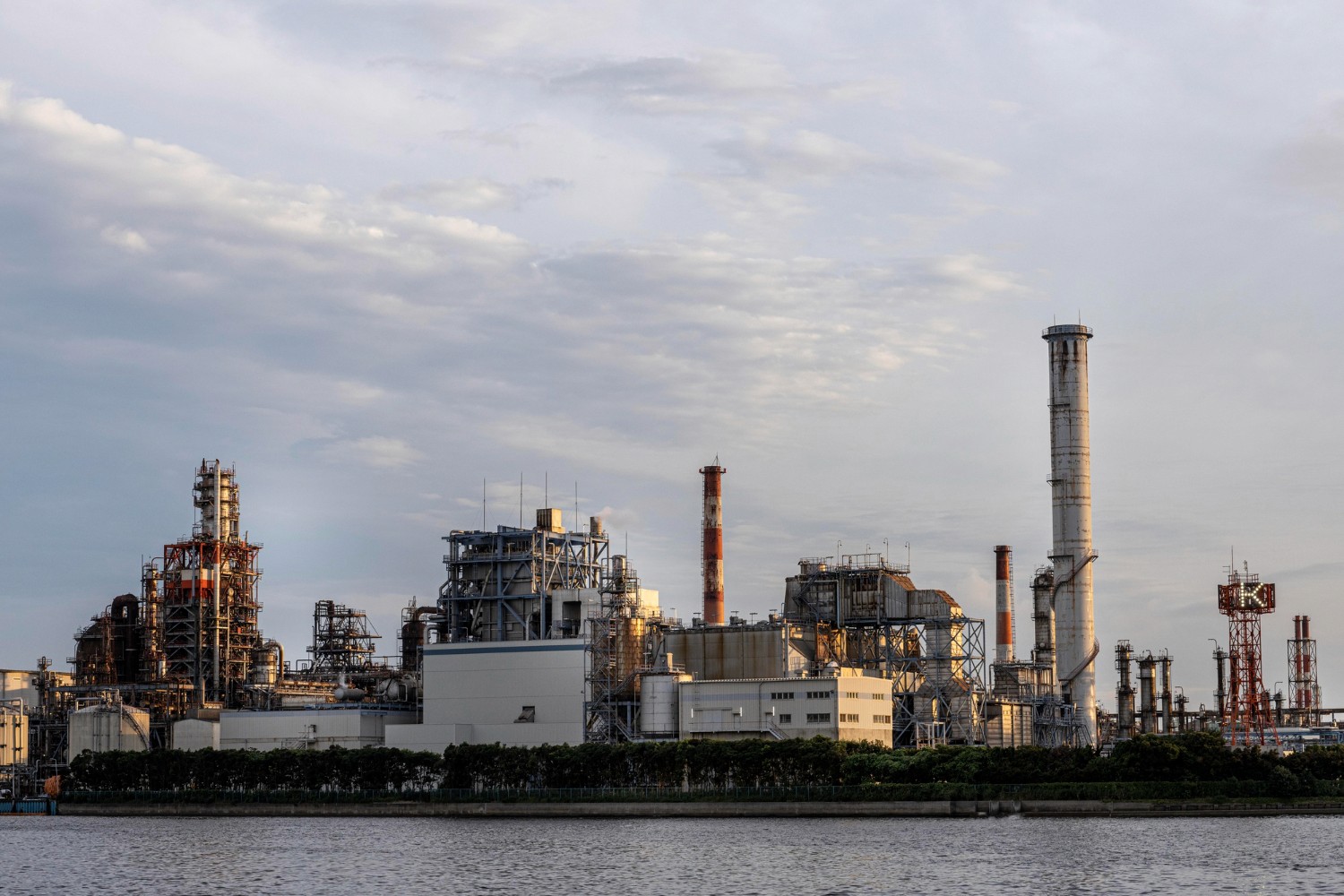

Zuari Industries operates a co-located sugar manufacturing plant and a 30.85 MW co-generation power plant under its SPE Division. The two facilities run on separate Distributed Control Systems (DCS), with a 150 TPH boiler, turbine alternator, mill house, refinery, and supporting auxiliary equipment all generating real-time process data.
Process control was concentrated at the plant. The DCS instrumentation existed at scale 104 tags across the sugar plant and 145 tags across the power plant covering boilers, FD/ID/SA fans, feed pumps, deaerator, economiser, turbine alternator, gear wheels, and grid parameters but visibility of those values was confined to the local SCADA terminals at each plant. The Plant Head and his assistant were the two people responsible for watching critical thresholds in real time.
Following a serious safety incident involving a boiler failure, the corporate leadership directed that critical-parameter visibility could no longer depend on two people physically present at the plant. They needed remote, role-based access to live process values and short-horizon trends from any of their corporate offices, with the discipline of a single source of truth across both plants.
The operational risk was structural, not technical-debt. A summary of the failure modes the Zuari team brought to KGT:
Single point of human dependency: Critical-parameter monitoring across both plants relied on the Plant Head and one assistant. If either was off-shift, on leave, or attending to another part of the plant, deviations on the remaining 249 critical tags could go unobserved until they escalated.
No remote visibility for corporate stakeholders: The existing SCADA was a local-only system. Engineering heads and division leadership sitting in different cities had no direct way to see live values from the boiler, turbine, mill house, or refinery - they were dependent on phone calls and shift logs after the fact.
No consolidated trend view: Operators could see current values on the SCADA HMI, but there was no consolidated short-horizon trend that let a remote reviewer answer “has this parameter been drifting toward its alarm limit over the last shift?”
No threshold ownership outside the plant: Min/max limits and alarm bands lived inside the DCS configuration. Adjusting them, adding new tags to a watch list, or revoking a viewer’s access required physical presence at the plant rather than a controlled administrative workflow.
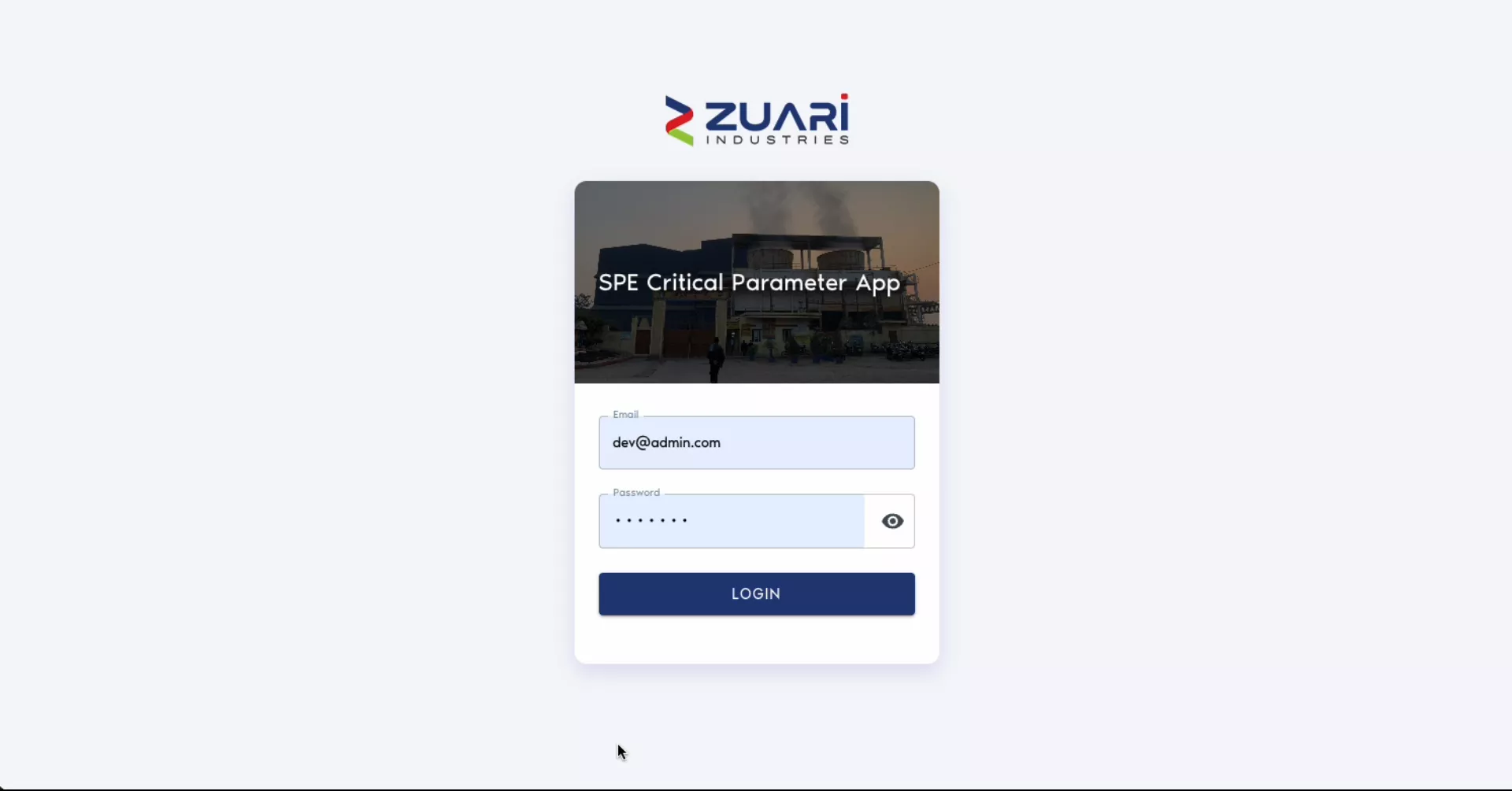
KGT designed and built a secure web application that pulls real-time tags from the existing Sugar and Power DCS servers via the OPC Gateway, persists them to a local SQL Server with a 24-hour retention policy, and exposes them through HTTPS dashboards with role-based access. Deployment is fully on-premise no plant data leaves Zuari's network and the application runs on dual-environment infrastructure (Pre-Production and Production) for safe rollout of changes.
Deployment Breakdown:
OPC data acquisition layer. Configured an OPC Client (OPC Expert PRO) connecting to both DCS servers via the OPC Gateway, polling ~500 tags/second across the sugar plant (Mill House, DS House, RS House, Refinery Dryer, Refinery Quad) and power plant (150 TPH Boiler, 30.85 MW Turbine, FD/ID/SA fans, BFP, deaerator, drum extractor, economiser, AVR, plenum hopper, travelling grate drive, turbine alternator/gear wheel/pinion, grid).
Local historian with bounded retention. SQL Server schema (SugarPlantTags, PowerPlantTags, HistoricalData, Users, Sessions, Logs) persisting every polled value with timestamp; auto-deletes records older than 24 hours.
Three-state classification engine. Stored procedures classify each tag in real time as Critical (outside Low/High band), Caution (currently in-band but breached in the last 24 hours), or Ideal colour-coded red/amber/green inline on the dashboard.
Six-page React dashboard. Separate Sugar Plant and Power Plant dashboards broken down by area/equipment. Landing page surfaces Ideal/Caution/Critical chips for both plants; one click opens a cross-area aggregated view of every breached tag; drill-down opens an interactive 24-hour trend chart with threshold bands, brush-zoom scrubber, hover readout, and fullscreen mode.
Admin panel for plant-side control. Tag Management screen where admins can activate/deactivate tags, edit display names, equipment, section, signal type, parameter type, unit, and Min/Max limits - and register or revoke Viewer accounts. No code changes or DCS modification required.
Authenticated, audited access. Role-based authentication (Admin/Viewer) backed by a Sessions table; every administrative action written to a Logs table for traceability.
Hardened web delivery. Hosted on IIS 10.0 over HTTPS with TLS 1.3 certificate; firewall rules scoped to OPC Client ↔ Gateway, HTTPS, and RDP only.
Tech Stack:
Python (backend)
React.js (frontend)
SQL Server Express
OPC Expert PRO (OPC Client)
ODBC
IIS 10.0
Windows Server 2019/2022
TLS 1.3 (DigiCert)
Timeline: Approximately 4 weeks from kickoff to live deployment - split as 2 weeks of development (OPC client + DB + backend + frontend) and 2 weeks of SIT, UAT, deployment and operator training across the Pre-Production and Production environments.
The system has been signed off by the Zuari team and is live in production. Formal before/after operational metrics (incident response time, deviation-to-action latency, etc.) have not yet been captured over a long-enough operating window to publish here. The deployment metrics below describe what the system was built to do and what it is doing in production today.
Capability | Delivered |
|---|---|
Critical parameters under continuous monitoring | 249 (104 sugar plant + 145 power plant) |
Tag refresh rate from DCS | ~500 tags per second via OPC Gateway |
Remote viewers supported | Unlimited Viewer + Admin accounts; access controlled per-user |
Trend history visible in dashboard | Rolling 24 hr per tag, with High/Low band overlay, zoom scrubber, fullscreen mode |
Cross-area drill-down for breached tags | One-click filtered list of every Critical or Caution tag across all houses of a plant |
Threshold configuration without code change | Yes via Admin panel; changes audited in Logs table |
Plant network exposure | None fully on-premise; no plant data leaves Zuari's network |
Delivery time, kickoff to production | ~30 days (15 dev + 15 SIT/UAT/deployment) |
Beyond the table, the qualitative shift for Zuari is structural: critical-parameter awareness is no longer concentrated in two people physically present at the plant. Division leadership and authorised engineering staff in other cities can now open a browser, sign in, and see Ideal / Caution / Critical chips for both plants on the landing page a single click opens a cross-area list of every breached tag, and a further click drills into that tag's 24-hour trend with threshold bands overlaid. Adjusting alarm thresholds or onboarding a new corporate viewer is now a controlled administrative action with an audit trail, not a DCS configuration change.
