Is Blockchain Development the Future of Quality Control?

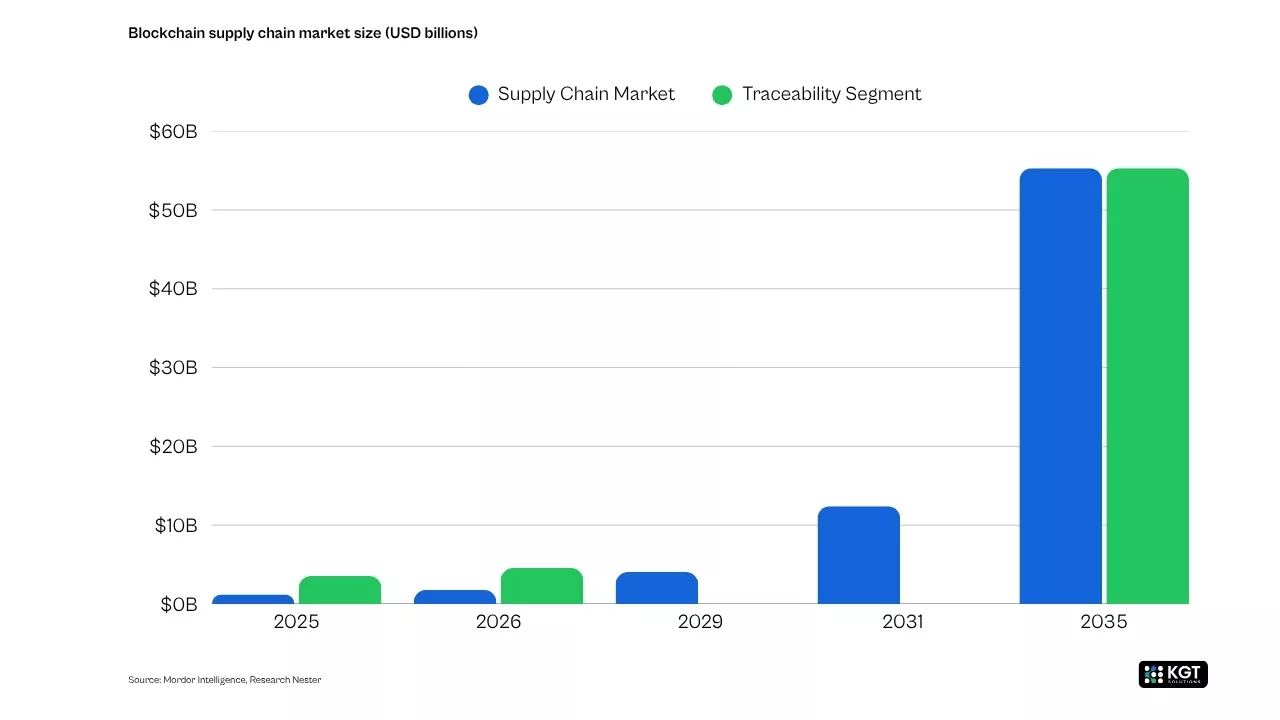
Blockchain development is changing how companies verify product quality, and the market data backs it up. The blockchain supply chain market hit $1.20 billion in 2025 and is projected to reach $12.41 billion by 2031 at a 47.65% CAGR (Mordor Intelligence). That kind of growth doesn't happen on hype alone. It happens because nobody trusts paper trails anymore.
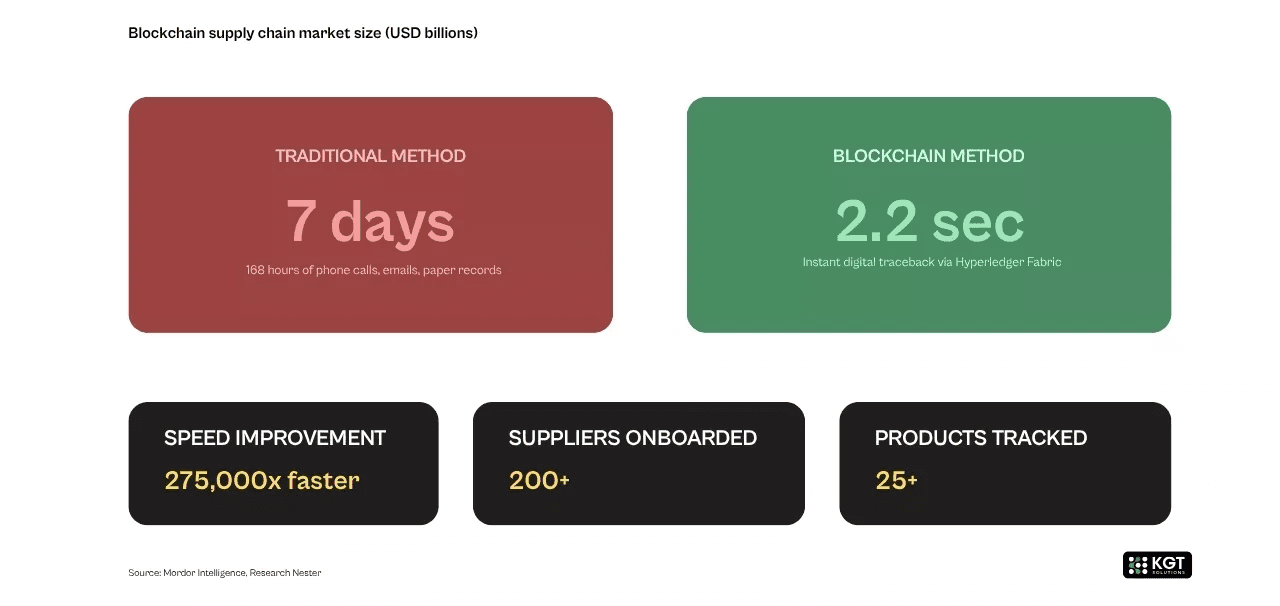
One stat keeps pulling me back in. Walmart used blockchain to trace the origin of mangoes. The old way took 7 days. With blockchain, it took 2.2 seconds. That is not a marginal improvement. That is a different category of quality control altogether.
Why traditional quality control falls short
Most quality control systems still run on paperwork, disconnected databases, and phone calls. When contamination hits a food supply chain or a counterfeit batch enters a pharma pipeline, companies spend days figuring out where things broke. The WHO estimates around 420,000 people die annually from food poisoning. In the US alone, the economic cost of food safety failures runs between $55.5 billion and $93.2 billion per year (IBM).
The issue is not missing standards. Data sits in silos. Each company records its own version of events, and reconciling those versions during a crisis is slow and often too late.
How blockchain development changes quality assurance
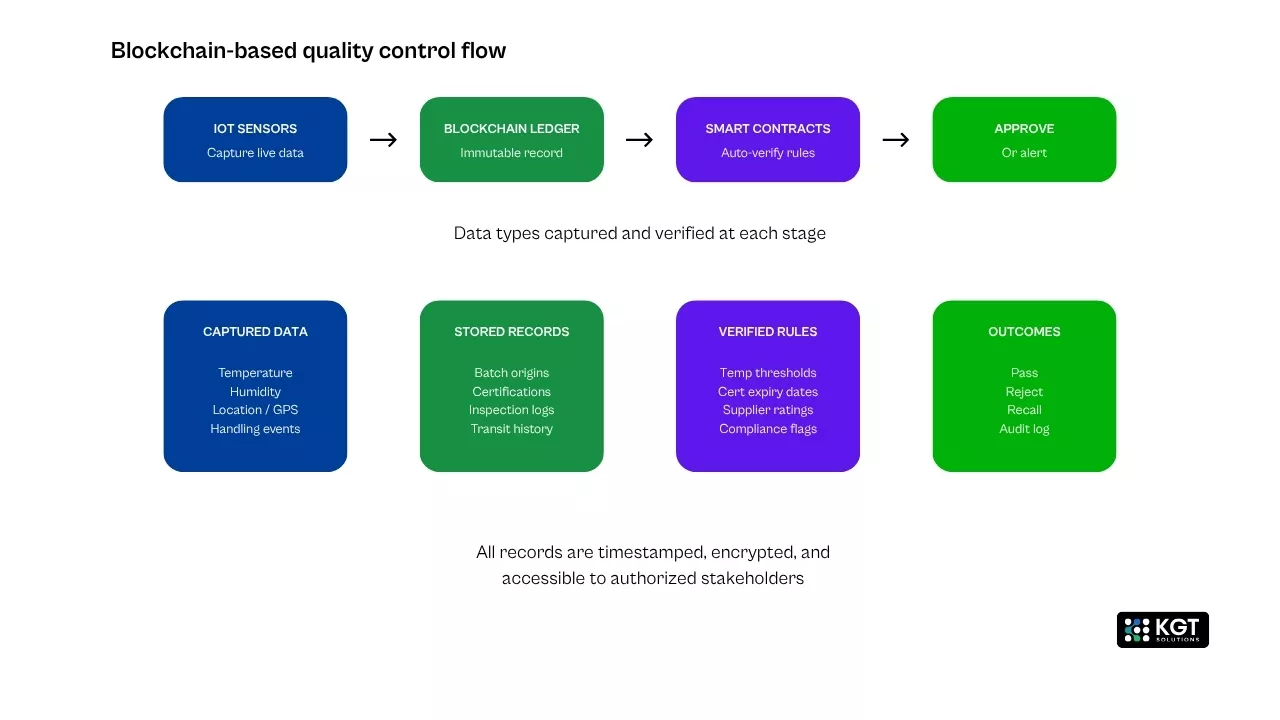
Blockchain development gives every product a tamper-proof digital history. Every inspection, handoff, and storage condition gets recorded in an immutable ledger that all authorized parties can access. Nobody can quietly edit records after the fact.
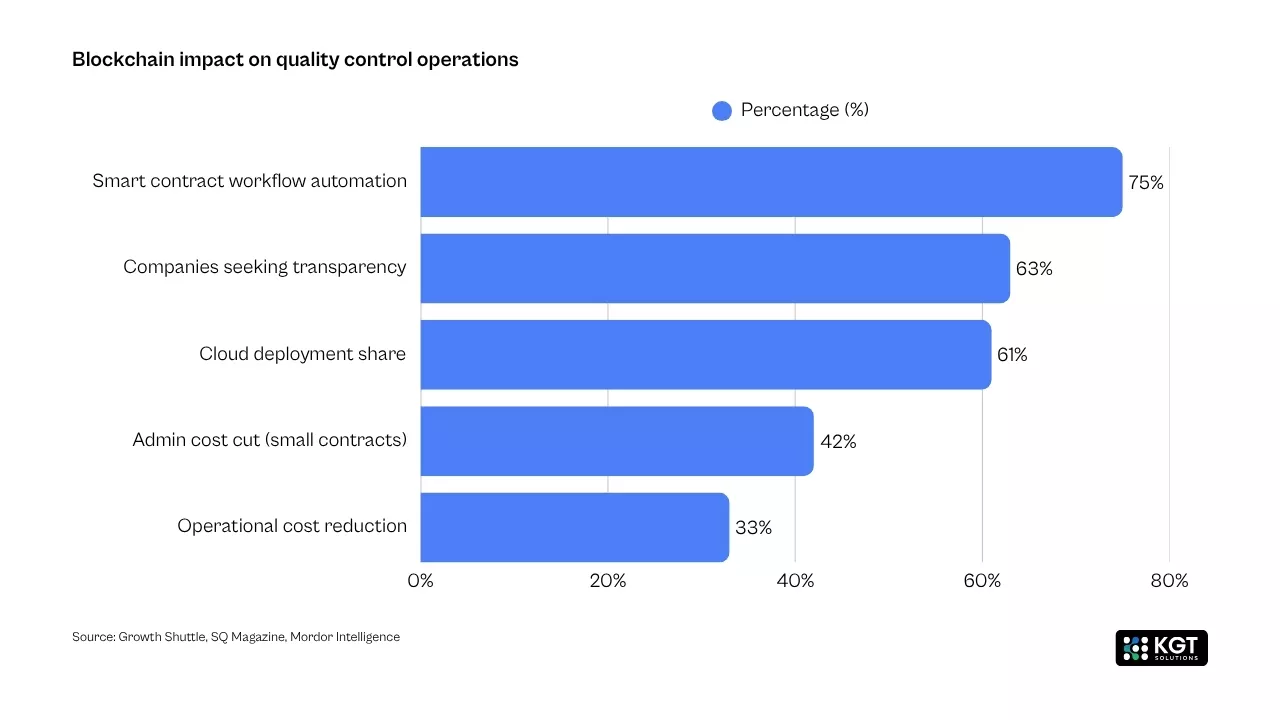
Smart contract development companies are layering automated verification on top of this. A smart contract can flag a pharma shipment if its temperature exceeds safe limits or automatically reject raw materials when a supplier's certification expires. By 2025, over 65,000 smart contracts were actively used in logistics and manufacturing, handling 70% to 80% of workflows like purchase approvals and shipping validations (Growth Shuttle).
Blockchain development services flip quality control from reactive to proactive. The system catches problems as they occur, sometimes before a product reaches the next stage.
Blockchain in food safety: the Walmart example
Walmart partnered with IBM to build a food traceability system on Hyperledger Fabric. They tested it on pork in China and mangoes in the US.
For pork, the system let suppliers upload certificates of authenticity directly to the blockchain, fixing longstanding trust problems. For mangoes, traceback went from 7 days to 2.2 seconds. By 2020, Walmart made it mandatory for all leafy greens suppliers, and over 200 joined. The food supply chain blockchain market was valued at $840 million in 2025 and should reach $4.04 billion by 2029 at a 48.3% CAGR (ScienceSoft).
This is not isolated. In July 2025, Domino India partnered with BlockSynergy Technology to launch TagITX, a blockchain traceability solution printing tamper-evident QR codes for real time product verification.
Pharma and manufacturing: where it gets serious
The WHO estimates the global counterfeit medication market costs around $83 billion. People die from fake drugs, and blockchain addresses this directly.
Pfizer and Eli Lilly have collaborated on blockchain based drug tracking across the supply chain. Infosys Pharma built a pre-configured blockchain network for medicine quality monitoring. Smart contracts handle quality regulation, traceability, and automated alerts without manual oversight.
Custom blockchain development is gaining ground in manufacturing too. Renault's XCEED initiative, launched in July 2025, processes over 1 million compliance documents at up to 500 transactions per second, turning regulatory reporting into real time verification.
MVP Development Company: How Founders Choose Right
The role of emerging technologies alongside blockchain
The strongest quality control systems combine blockchain with IoT sensors and AI analytics. IoT captures data like temperature and humidity. Blockchain stores it immutably. AI spots patterns that predict failures before they happen. Web3 development services and Web3 application development platforms tie these pieces together into coherent systems.
A crypto wallet development company might seem unrelated to quality control, but the underlying infrastructure, cryptographic identity and access management, applies directly to permissioned supply chain networks. AR VR development companies and XR development services are also exploring how immersive interfaces can visualize supply chain data from blockchain ledgers. Think of a factory manager using AR to see real time quality metrics pulled from an immutable record.
What is holding blockchain back in quality control?
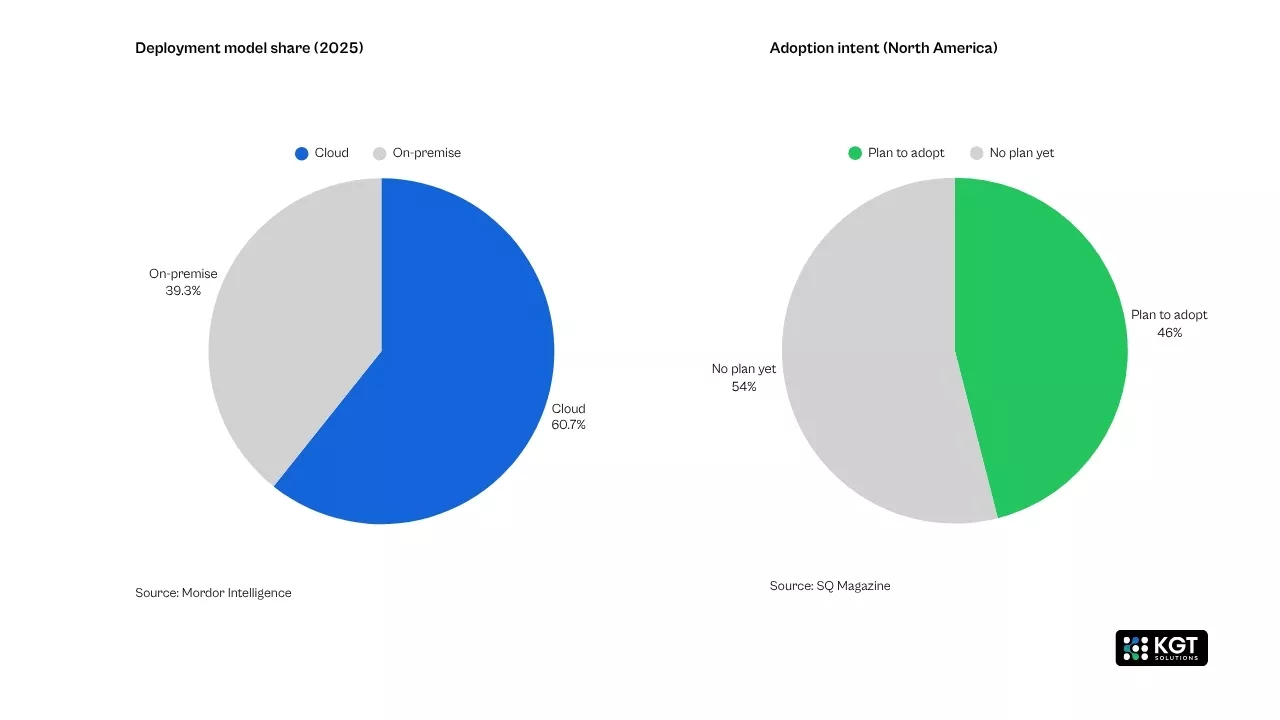
Cost is one barrier. Building blockchain solutions for quality control requires investment in infrastructure, training, and integration. Cloud hosted blockchain networks (60.72% market share in 2025) are lowering the bar, but smaller companies still feel the squeeze.
Interoperability is another. Different blockchain platforms don't always communicate well. Cross border supply chains need coordination across regulatory environments and technical standards. Emerging technology solutions focused on cross chain compatibility are making progress, but the problem isn't solved.
And there is the human element. Research published in the Journal of Operations Management found that some supply chain organizations lack basic incentive to digitize their paperwork, let alone upload data to a blockchain owned by another company. Getting every stakeholder to participate is as much about change management as it is about technology.
So, is blockchain development the future of quality control?
Blockchain development is becoming a foundation for quality control wherever traceability, data integrity, and speed matter. The supply chain traceability market was valued at $3.55 billion in 2025 and is expected to exceed $55.31 billion by 2035 at a 31.6% CAGR (Research Nester). About 46% of North American supply chain firms plan to adopt blockchain, and 63% are seeking verification systems to improve transparency (SQ Magazine).
Blockchain won't replace every existing quality system overnight. But for pharma, food, automotive, and electronics, where a recall costs millions or a counterfeit costs lives, this technology is already proving it works. Dapp development companies, Web3 development companies, and blockchain development services providers are building this infrastructure now. Metaverse development services and crypto token development services are expanding the ecosystem, creating new models for product authentication and decentralized quality governance.
The technology is ready. The question is whether your supply chain is.
Frequently Asked Questions
How can blockchain technology improve quality control in manufacturing?
What specific quality control problems does blockchain solve that traditional systems cannot?
Is blockchain-based quality control practical for small and mid-size manufacturers?
How does blockchain quality control integrate with existing MES and ERP systems?
What industries are leading the adoption of blockchain for quality control?
Sources:
Mordor Intelligence, "Blockchain Supply Chain Market," January 2026.
Hyperledger Foundation, "Walmart Food Supply Chain Case Study."
SQ Magazine, "Blockchain in Supply Chain Finance Statistics 2025."
Growth Shuttle, "Top 7 Trends in Supply Chain Digitalization 2026."
Research Nester, "Blockchain for Supply Chain Traceability Market to 2035."
ScienceSoft, "Blockchain for the Food Supply Chain."
DataM Intelligence, "Food Traceability & Blockchain Market 2025-2032."
Stellarix, "Blockchain in Pharma: Transparency and Tracing Solutions."
World Economic Forum, "How Blockchain Can Keep Your Food Safe," 2019.
Journal of Operations Management, "Blockchain in Operations and Supply Chain Management," 2025.
Stay Ahead of Systems Innovation
AI-first SaaS, Web3, and XR insights covering systems, product thinking, and technologies that move from idea to production.