Digital Twin in Manufacturing: A Plant Manager's Guide

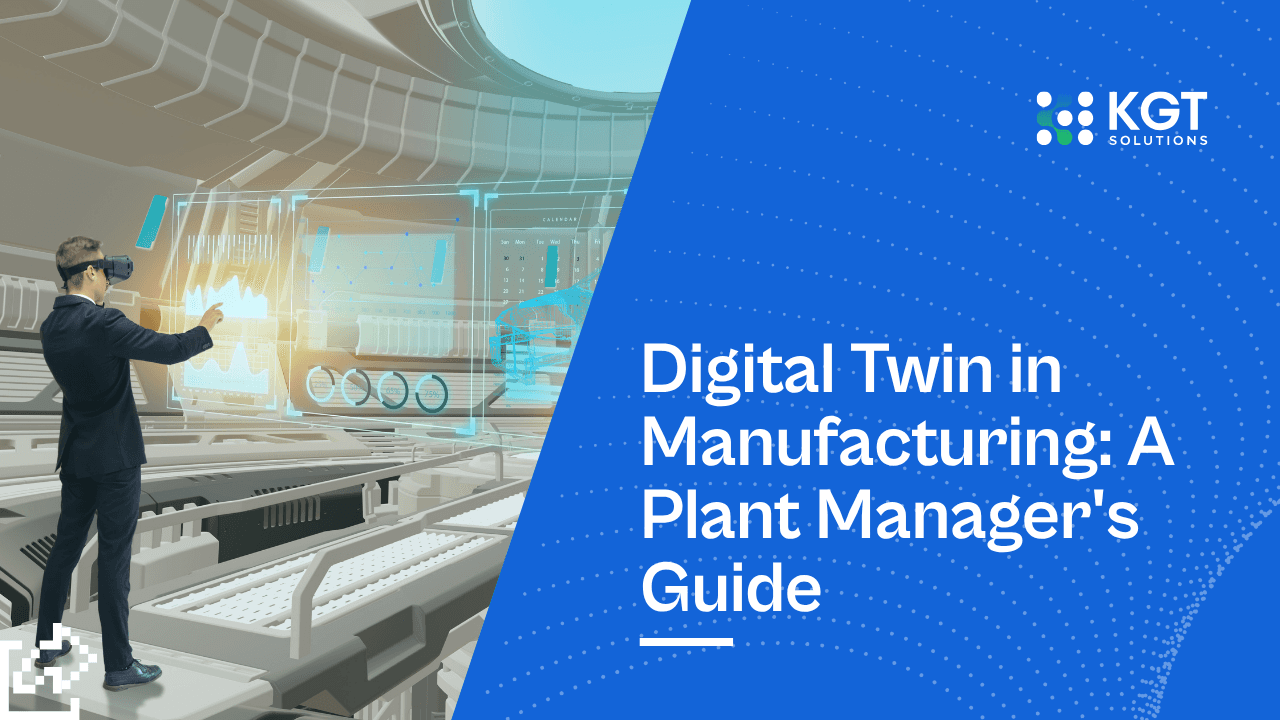
A digital twin in manufacturing is a live virtual copy of a machine, fed by sensor data, used to predict failures before they cost you.
Key Takeaways
A factory digital twin mirrors a real asset in real time, so you test changes virtually before touching the floor.
Plants using this technology report 10-30% less unplanned downtime and faster root-cause analysis on breakdowns.
The global market for this technology is growing fast, projected to pass $100 billion by the early 2030s.
You don't need to twin the whole plant. Start with one bottleneck asset and prove ROI in 90-120 days.
What Is a Digital Twin in Manufacturing?
A digital twin in manufacturing is a real-time virtual model of a physical asset, connected by IoT sensors, that mirrors how the real thing behaves.
Picture a flight simulator for your CNC machine. The simulator copies the real cockpit so pilots can crash safely and learn. A twin does the same for your equipment. It copies the real machine in software, so you can break things, test fixes, and run "what if" scenarios without stopping production.
The twin is not a one-time 3D drawing. It's a living model. Sensors on the real asset stream temperature, vibration, pressure, and cycle data into it every few seconds. When the real machine drifts, the model drifts with it. That live link is what separates a twin from a plain CAD file.
For plant managers already tracking machine health, this builds on tools you may already run. If you're measuring equipment effectiveness, our guide on OEE meaning and formula pairs naturally with twin data.
How Does a Digital Twin Work on the Plant Floor?
A digital twin works by linking three layers: physical sensors, a data pipeline, and a virtual model that updates in real time.
The data flow is simpler than vendors make it sound. Here's the loop that runs on the floor:
Sensors collect data. IoT sensors and PLCs read vibration, heat, and throughput from the asset.
Data streams to the model. That data flows through SCADA or an edge gateway into the twin.
The twin simulates. Software compares live readings against the expected behavior model.
It flags drift. When readings stray from normal, the twin warns you before a breakdown.
This connection between digital twin and IoT is the engine. No sensors, no model. The richness of your twin depends entirely on the quality and frequency of the data feeding it. One cheap sensor tells you little. A full sensor suite catches problems weeks early.

What Types of Digital Twins Exist?
Types of digital twins range from a single component twin to a full system twin, each matching a different scope and budget.
You pick the type based on what problem you're solving. Four common ones show up in manufacturing:
Component twin: Models one part, like a bearing or motor. Cheapest to build.
Asset twin: Models a full machine and how its parts interact.
System twin: Models a whole production line and the handoffs between machines.
Process twin: Models the entire plant workflow, end to end.
Most plants start small. A component or asset twin proves the concept on one troublesome machine. Once it pays off, you scale up to a system twin. Trying to model the whole plant on day one is how these projects stall and get cancelled.

How Does a Digital Twin Connect to Existing Systems?
A digital twin connects to existing systems through SCADA, MES, and ERP links, so it pulls live data without ripping out your current setup.
You don't scrap your control systems to add one. The twin layers on top. It reads from the digital manufacturing systems you already run, your SCADA for control data, your MES for production data, your ERP for orders and inventory.
The integration work is the hard part, not the modeling. Many plants underestimate how messy their existing data is. Legacy PLCs with no network port, sensors logging to local spreadsheets, three different data formats across two production halls. Budget real time for cleaning and connecting data. That's where most of the project hours go.
IT OT Convergence in Manufacturing Explained
What Are the Benefits of a Digital Twin in Manufacturing?
The benefits of digital twin in manufacturing include less downtime, faster troubleshooting, safer testing, and better capacity planning.
The payoff is concrete, not theoretical. Here's what plants actually report after deploying twins:
Benefit | What it means on the floor | Typical impact |
|---|---|---|
Predictive maintenance | Catch failures weeks early | 10-30% less unplanned downtime |
Virtual testing | Try line changes in software first | Fewer costly trial-and-error stops |
Faster root cause | Replay the breakdown in the twin | Hours saved per incident |
Capacity planning | Simulate new product runs | Better quotes, fewer surprises |
The biggest win for most VP Ops is downtime. When a line goes down, you're losing money by the minute. A model that flags a failing bearing two weeks out turns an emergency into a scheduled fix. That single shift, from reactive to planned, often justifies the whole project. Our breakdown of predictive maintenance ROI shows the downtime math in detail.
How Much Does a Digital Twin Cost and What Is the ROI?
A digital twin for manufacturing starts in the low tens of thousands for one asset and scales with sensor count and integration depth.
There's no single price tag, and any vendor who quotes one without seeing your floor is guessing. The cost depends on three things: how many sensors you need, how messy your existing data is, and how big the twin's scope is.
A rough breakdown for a single-asset twin:
Sensors and edge hardware: the smallest line item, often a few thousand dollars.
Software and modeling: the recurring license plus build time.
Integration and data cleanup: usually the biggest cost, and the most underestimated.
The honest truth most case studies skip: your first build will cost more and take longer than planned. The data integration always surprises people. But once the first one works and the data pipes are built, the second and third get much cheaper. Plan for a slow, expensive start and a fast, cheap scale-up. Aim to prove ROI on one bottleneck asset in 90-120 days before you expand.
Frequently Asked Questions
What is a digital twin in manufacturing and how does it work?
How much does implementing a digital twin in a manufacturing plant cost?
What measurable benefits do plant managers see from digital twins?
How long does it take to build and deploy a manufacturing digital twin?
What data infrastructure does a manufacturing plant need for digital twins?
Conclusion
A digital twin in manufacturing earns its keep by turning surprise breakdowns into scheduled fixes, starting with one bottleneck asset. Pick your most troublesome machine, twin it, and measure downtime over one quarter. If you want help scoping that first twin or wiring up the data, talk to the KGT Solutions team before you buy any sensors.
Sources:
MarketsandMarkets - Digital Twin Market Global Forecast
Grand View Research - Digital Twin Market Size Report
Deloitte - Digital Twins in Manufacturing
McKinsey & Company - Digital Twins in Industrial Operations
World Economic Forum - Global Lighthouse Network Manufacturing Report
Industrial Autonomous Floor
Newsletter
Actionable insights on industrial AI, automation, and smart operations built for safe, secure, and compliant real-world environments.