The Real Job of A Web3 Development Company Isn't Tech

Most people assume a Web3 development company exists to write smart contracts and spin up nodes. I get why. The language around this industry is so saturated with protocol names and consensus mechanisms that it's easy to forget what's underneath: people trying to trust each other without a middleman.
But here's what I keep seeing after watching dozens of blockchain projects launch, stall, and occasionally succeed. The ones that work aren't the ones with the best code. They're the ones that figured out the human side first.
Why most blockchain development services miss the point
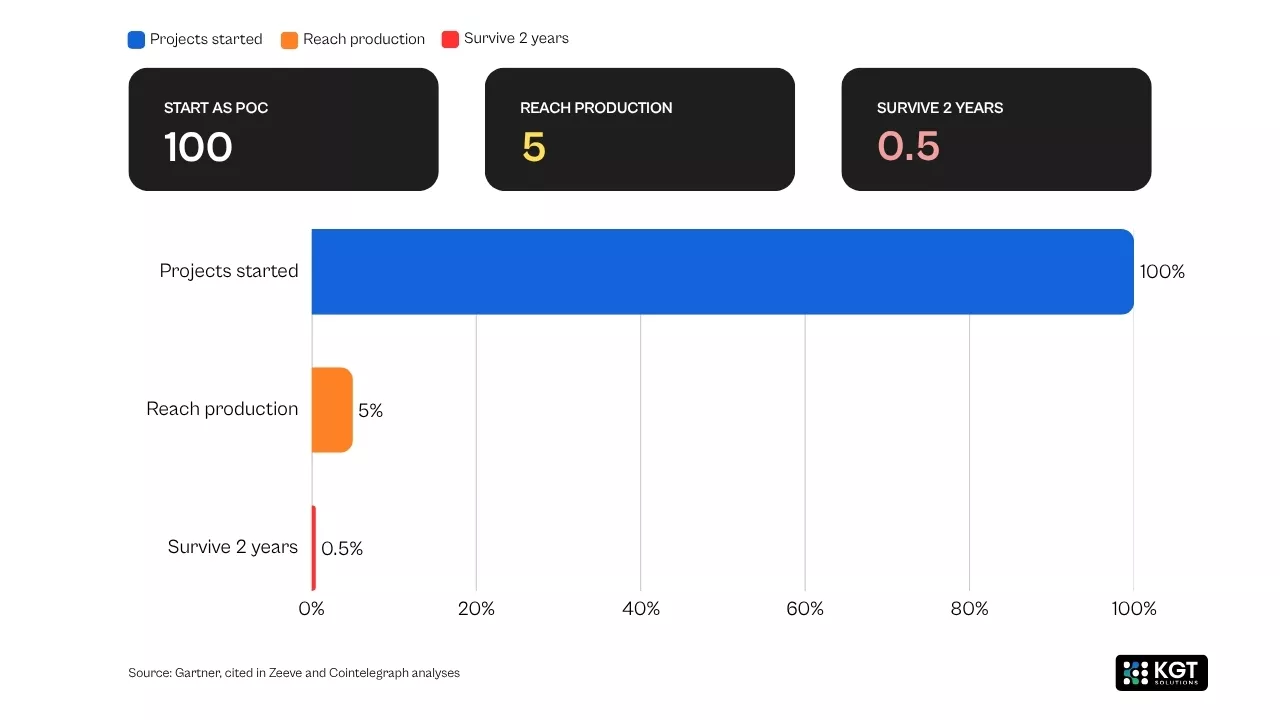
According to Gartner, only 5% of enterprise blockchain projects make it past proof-of-concept to production. Of those, 90% need replacement within two years. That's a staggering failure rate, and the reasons almost never come down to bad engineering. They come down to unclear business goals, misaligned incentives, and communities that never materialized.
A firm that only ships code is basically building a house with no one to live in it. The real work of any Web3 partner is understanding what problem decentralization actually solves for the people involved, and whether those people care enough to participate.
What a Web3 development company actually does when it's doing its job
A Web3 development company translates decentralized technology into real business outcomes, community governance, and user ownership. It doesn't start with a blockchain. It starts with a trust deficit.
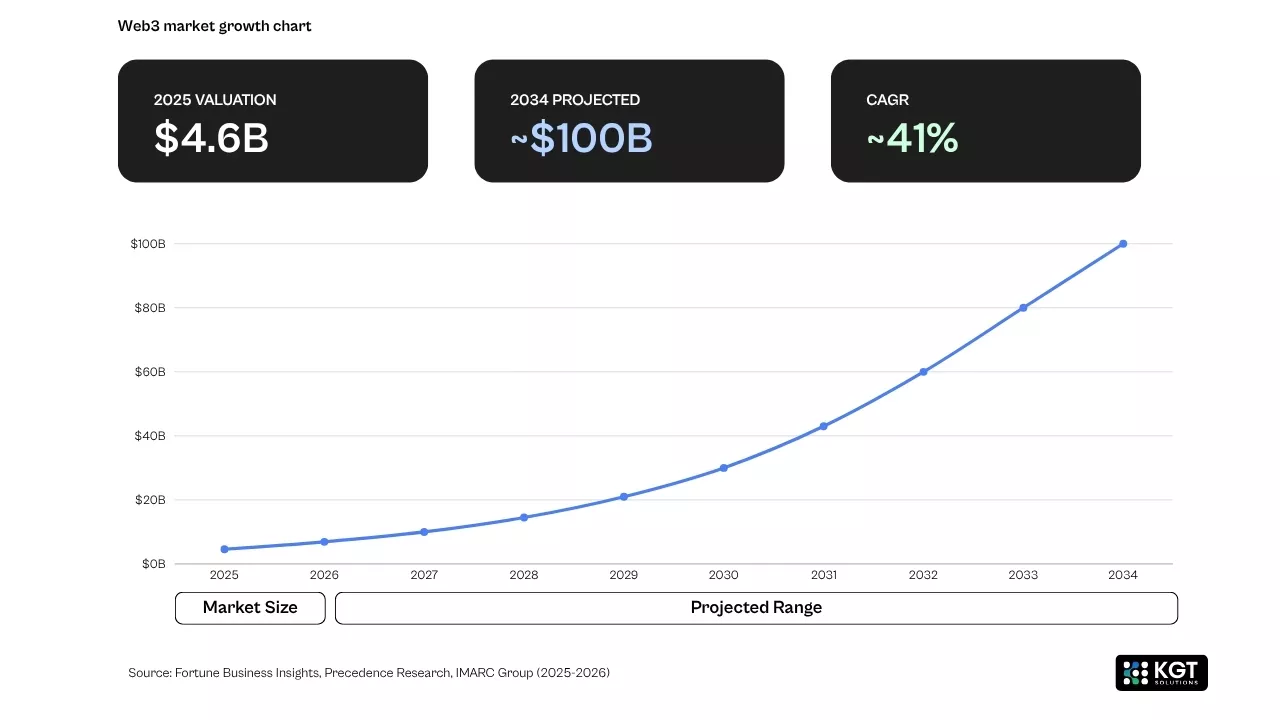
The Web3 market was valued at roughly $4.6 billion in 2025 and is projected to grow at a CAGR above 40% through 2034, according to multiple industry reports from Fortune Business Insights and Precedence Research. That growth won't come from deploying more smart contracts. It'll come from teams that tie those contracts to actual user needs: transparent supply chains, verifiable credentials, programmable finance, community governed platforms.
Custom blockchain development only matters when it answers a question most teams skip: "Why can't we just use a regular database for this?" If the answer isn't compelling, neither is the project.
Trust is the product, not the token
A 2025 study on DeFi governance events found that 55% of incidents caused an average 14% drop in governance asset prices. When trust breaks down on-chain, users leave. Tokens crash. The tech keeps running, but nobody cares.
This is where Web3 development services separate from generic dev shops. Good decentralized solutions bake trust into the product itself through transparent governance, auditable transactions, and user-controlled data. The code enables it, but the trust architecture is the actual deliverable.
I watched a Dapp development company spend six months building a decentralized lending platform. The Solidity was clean. The problem was that nobody had thought through what happens when a whale dumps governance tokens during a liquidity crunch. The incentive design, the governance model, the onboarding that doesn't feel like a CS exam; that's where the real engineering lives.
Where emerging technology solutions fit in
Web3 doesn't exist in a vacuum. Over 50 million users worldwide now actively use Web3 applications, according to eSpark Info's 2026 data roundup. Many of those interactions happen at the intersection of blockchain and other technologies.
Metaverse development services, for instance, rely on blockchain to make digital assets portable and genuinely owned. Without that layer, a virtual property or avatar is just a row in somebody else's database that can be deleted at any time. VR development companies building immersive experiences increasingly need on-chain ownership to make those experiences economically meaningful.
The same goes for XR experiences and AR VR development company offerings. When you combine spatial computing with blockchain-verified ownership, you get something close to a real digital economy instead of a theme park controlled by one corporation.
Web3 application development is converging with AI, IoT, and spatial computing. A 2025 industry analysis found that combining AI with blockchain increased decentralized application productivity by about 30%. The advance tech solution isn't any single technology; it's the integration layer that ties them together around user needs.
MVP Development Company: How Founders Choose Right

Community isn't a marketing channel, it's infrastructure
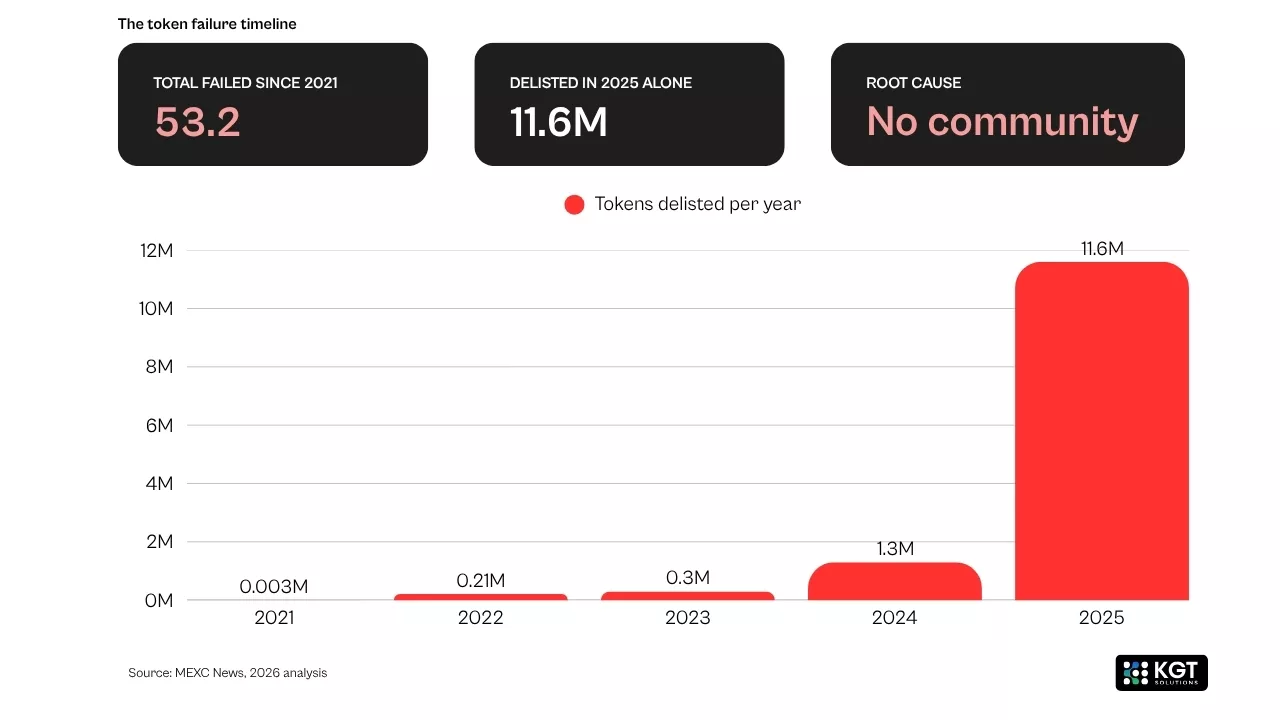
Here's something the crypto token development services crowd figured out the hard way: over 53% of crypto projects launched since 2021 have ceased trading entirely, according to a 2026 MEXC analysis. In 2025 alone, 11.6 million tokens were delisted. Most failed tokens had functioning code but no functioning community, which tells you everything about where real value lives in Web3.
The community around a Web3 project is its infrastructure, not its audience. Validators, governance participants, liquidity providers, content creators; these people aren't users in the Web2 sense. They're co-operators. A Web3 development company that ignores community design is building a bridge to nowhere.
What to actually look for in blockchain development solutions
If you're evaluating a partner for your blockchain project, here's what separates the ones that deliver from the ones that don't:
They ask about your business model before they ask about your preferred chain. They design governance and incentive structures, not just smart contracts. They build onboarding that regular people can use without a tutorial. They treat security audits as a baseline, not a feature. And they have a point of view on tokenomics, not just the ability to deploy an ERC-20.
Blockchain development services that start with the business problem and work backward toward the technology produce projects that survive past year one. The 95% failure rate in enterprise blockchain isn't a technology problem. It's a strategy problem wearing a technology costume.
The bottom line
The Web3 market is headed toward $100 billion or more by 2034, depending on which analyst you ask. But most of that value won't go to companies that write the best Solidity. It'll go to the ones that understand how to design trust, align communities, and solve problems that centralized systems genuinely can't.
A Web3 development company worth hiring is one that treats the code as a means and the human coordination layer as the end. Everything else is just expensive infrastructure with no one using it.
Frequently Asked Questions
What does a Web3 development company actually do beyond coding?
Why do most Web3 projects fail despite having solid technology?
How should businesses evaluate a Web3 development company before hiring one?
Is Web3 development relevant for traditional businesses or only crypto-native startups?
What is the difference between a Web3 company that builds products and one that builds businesses?
Sources:
Fortune Business Insights, "Web 3.0 Market Size, Industry Share | Forecast, 2026-2034" (2026)
Gartner, Enterprise Blockchain Project Success Rates, cited in Zeeve and Cointelegraph analyses
Precedence Research, "Web 3.0 Market Size to Surpass USD 116.55 Billion by 2035" (2025)
MEXC News, "Cryptocurrency Failure Rate: 53.2% of Projects Launched Since 2021 Have Ceased Trading" (2026)
eSpark Info, "Web3 Development Statistics: Insights and Future Trends" (2026)
AInvest / DeFi Governance Study, "55% of DeFi Crime Events Cause Average 14% Decline in Governance Asset Prices" (2025)
Journal of Operations Management (Wiley), "Success and Failure of Blockchain Technology Providers" (2025)
Stay Ahead of Systems Innovation
AI-first SaaS, Web3, and XR insights covering systems, product thinking, and technologies that move from idea to production.