What Smart Contract Development Companies Hide (And Why It Costs You)

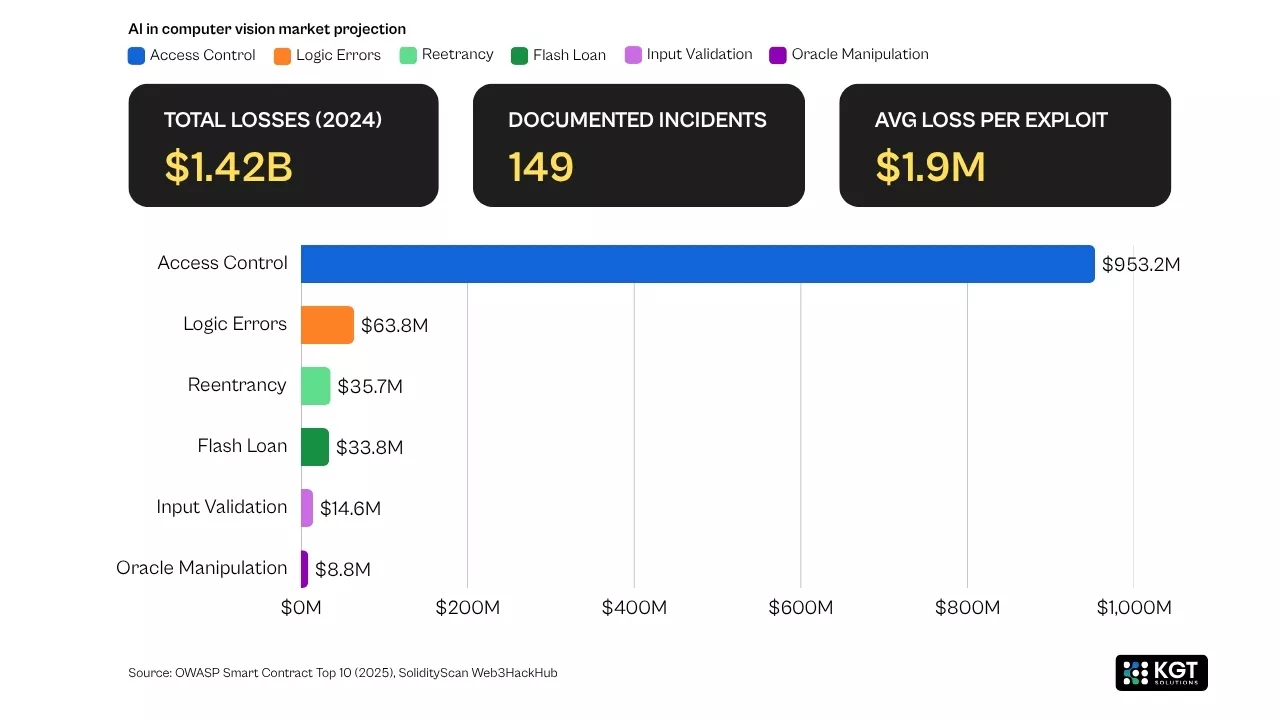
Most founders assume that hiring smart contract development companies means their code ships secure. That assumption has cost the Web3 industry over $2 billion in 2024 alone, spread across 149 documented incidents, according to data compiled by SolidityScan's Web3HackHub. The uncomfortable truth is that many blockchain development services providers leave out details that would change how you evaluate their work, their pricing, and your own risk.
This post breaks down what often goes unsaid.
Audits are not as thorough as they sound
A single smart contract audit does not guarantee security. Automated scanning tools like Slither and MythX catch roughly 90% of low-level vulnerabilities, but they routinely miss business logic flaws. According to OWASP's 2025 Smart Contract Top 10 data, logic errors were the second most costly attack vector in 2024, responsible for $63.8 million in losses. These are the bugs that pass syntax checks and pattern matching but still let attackers drain funds because the contract does exactly what the code says, not what the developer intended.
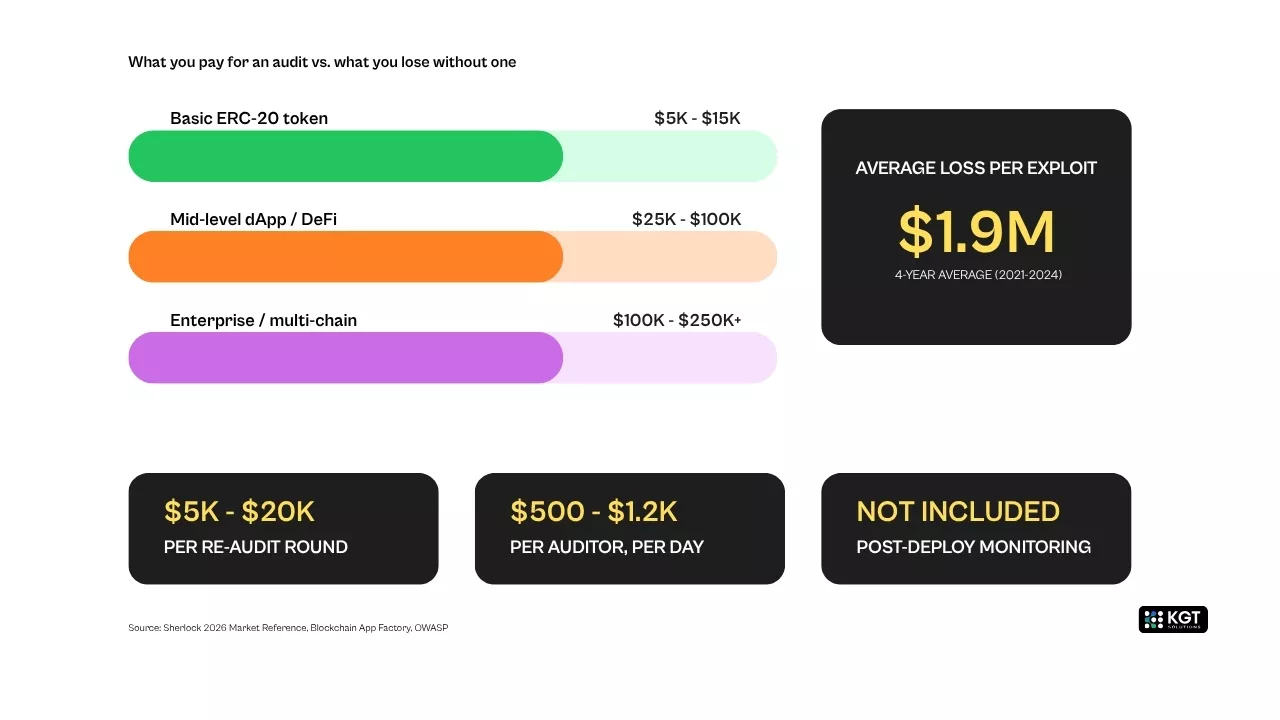
Most firms won't tell you this upfront: their "comprehensive audit" often leans heavily on automated tools with limited manual review time. A thorough manual audit for a mid-complexity DeFi protocol can cost $25,000 to $100,000, and many firms quote entry prices starting at $5,000 that exclude remediation checks and re-audit rounds. That gap between the advertised price and the real cost catches teams off guard constantly.
What smart contract development companies skip on post-deployment
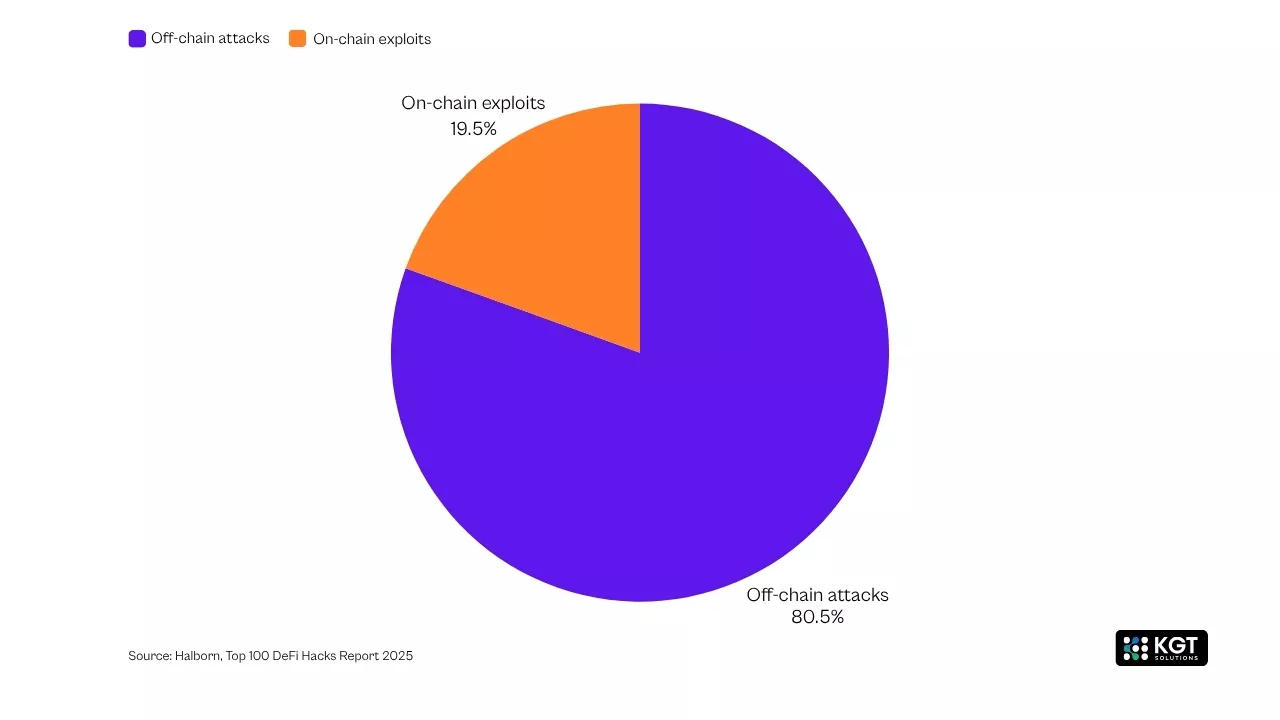
Security does not end at deployment. Yet most smart contract development companies treat the launch as the finish line. Halborn's Top 100 DeFi Hacks Report found that off-chain attacks accounted for 80.5% of stolen funds in 2024, with compromised accounts making up 55.6% of all incidents that year. These are not code bugs. They are operational failures: leaked admin keys, phishing against team members, supply chain compromises.
A Web3 development company that only writes and audits your contract, then walks away, is leaving you exposed to the attack vectors that actually cause the biggest losses. Post-deployment monitoring, key management protocols, and incident response plans are rarely included in standard engagements, and even more rarely discussed during the sales process.
The code reuse problem nobody talks about
Here is something that does not make it into marketing decks: a significant portion of smart contracts deployed today are forked or templated code with minimal customization. That is not inherently bad. Using battle-tested patterns from OpenZeppelin or similar libraries is often the right call. But when a blockchain development services provider charges custom development rates for what is largely copy-paste work, you are overpaying.
Worse, forked code inherits the original vulnerabilities. Sonne Finance lost $20 million in May 2024 because of a known vulnerability in Compound V2 forks. The exploit had been documented, warnings had been issued from previous incidents, and the protocol still did not implement adequate safeguards. The dapp development company that deployed it either did not check, or did not flag the risk.
Pricing opacity and scope creep
Smart contract audit costs range from $5,000 for a basic ERC-20 token to over $250,000 for enterprise-grade multi-chain systems. That is an enormous spread, and many firms exploit the ambiguity. According to Sherlock's 2026 market reference, most DeFi protocol audits land between $25,000 and $100,000. The average loss per smart contract exploit over the past four years sits around $1.9 million, which makes a $70,000 audit look reasonable in comparison.
But the pricing models matter. Time-based billing can run $500 to $1,200 per auditor per day. Fixed-fee quotes often exclude the re-audit rounds that almost every project needs after fixing initial findings, which typically add $5,000 to $20,000 per pass. Web3 development services providers who do not break this down upfront are either inexperienced or hoping you won't ask.
MVP Development Company: How Founders Choose Right

The access control blind spot
Access control vulnerabilities were the single most expensive attack category in 2024, responsible for $953.2 million in losses according to OWASP data. That is more than half of all DeFi exploit value for the year. The pattern is simple: critical functions like minting, upgrading, or withdrawing funds are left exposed to anyone who calls them.
This is a basic mistake, and yet it keeps happening. Many custom blockchain development providers do not implement robust role-based access controls by default. They build what the spec says, and if the spec does not explicitly mention access restrictions on every sensitive function, those restrictions often do not get added. The H1 2025 numbers are no better: roughly $3.1 billion in total Web3 losses, with access control failures continuing to lead the pack.
What to actually ask before hiring
If you are evaluating smart contract development companies, or any Web3 development company offering blockchain development solutions, here is what your due diligence should cover. Ask for the specific audit methodology: what percentage is automated versus manual review? Request the names and track records of the actual auditors who will work on your code, not the firm's best-known names who may never touch your project. Demand a clear breakdown of what happens after deployment. Ask whether the codebase uses forked contracts and, if so, which versions and what known vulnerabilities have been patched.
The global smart contracts market was valued at roughly $2.69 billion in 2025, up from $2.14 billion the prior year. Money is flowing in. But an estimated 61% of blockchain hacks have been attributed to sophisticated actors like the Lazarus Group. This is not an industry where you can afford to take your vendor's word at face value.
So who actually tells you the truth?
The best blockchain development solutions providers are upfront about what they can and cannot guarantee. One audit is not enough. Post-deployment monitoring is not optional. Their quote will not cover everything you need. The firms that hide these realities are not protecting you. They are protecting their close rate.
Frequently Asked Questions
What do smart contract development companies typically not disclose to clients?
How much should businesses budget for smart contract maintenance after deployment?
How can businesses verify the quality of a smart contract development company before hiring?
What are the biggest security risks in smart contract development that companies underestimate?
Can smart contracts be updated or fixed after deployment?
Sources:
OWASP Smart Contract Top 10 (2025)
SolidityScan Web3HackHub
Halborn, "Top 100 DeFi Hacks Report 2025"
Sherlock, "Smart Contract Audit Pricing: A Market Reference for 2026"
Coinlaw, "Smart Contract Security Risks and Audits Statistics 2025"
Hacken, "Top 10 Smart Contract Vulnerabilities in 2025"
OWASP Smart Contract Security, "2026 Top 10"
Stay Ahead of Systems Innovation
AI-first SaaS, Web3, and XR insights covering systems, product thinking, and technologies that move from idea to production.