Why Your Factory Needs A Crypto Wallet Development Company

If your business handles digital assets in any form, you already know the pain of cobbled together wallet solutions. Maybe you tried an off-the-shelf wallet, hit multi-chain limitations fast, and ended up wiring APIs together in ways nobody wants to maintain. That's where a dedicated crypto wallet development company comes in, and honestly, most factories and manufacturing businesses are late to the party.
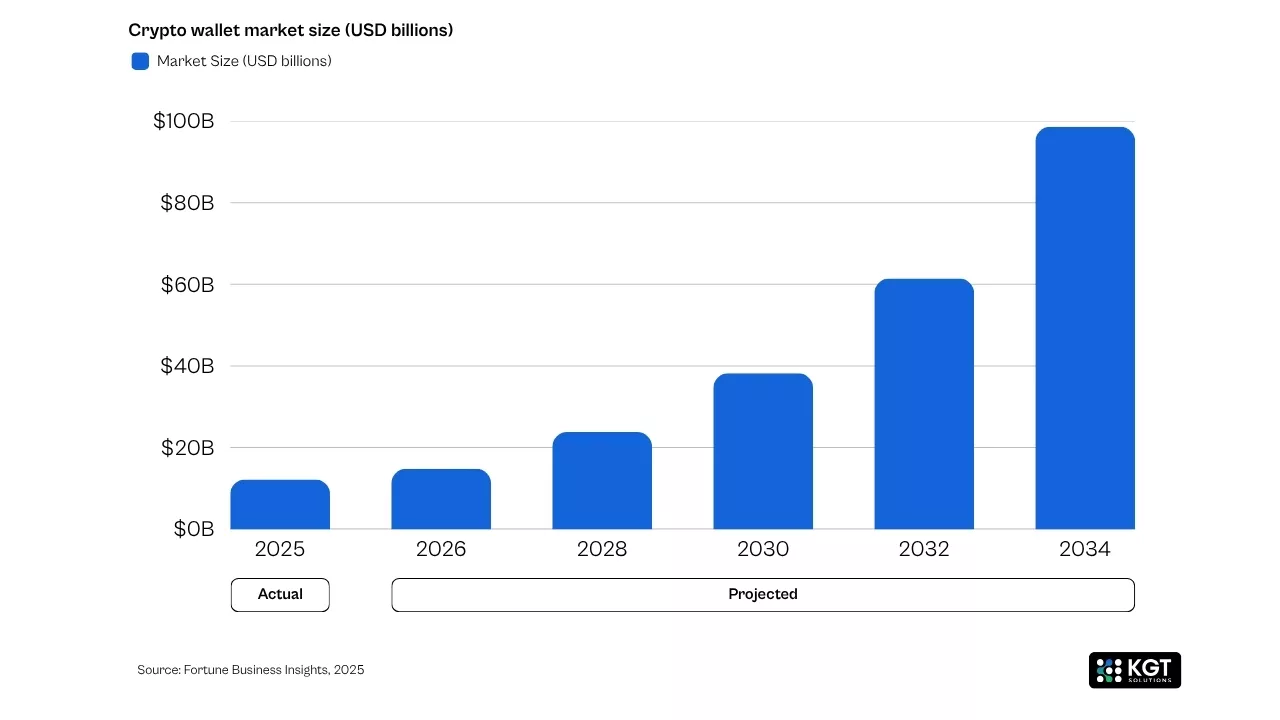
According to Fortune Business Insights, the global crypto wallet market was valued at $12.20 billion in 2025 and is projected to reach $98.57 billion by 2034, growing at a 26.7% CAGR. Those numbers include manufacturers, logistics companies, and industrial operations moving payments, vendor settlements, and supply chain financing onto blockchain rails.
A crypto wallet development company builds secure, custom digital wallet solutions tailored to how your business actually moves money and manages assets on the blockchain. That's the short answer.
The longer one: factories today deal with international suppliers, cross-border payments, raw material procurement across dozens of vendors, and increasingly, tokenized invoicing. A generic wallet from an app store doesn't handle any of that well. You need wallet architecture that integrates with your ERP, supports the specific chains your partners use, and meets the compliance standards your industry requires.
Crypto.com's 2025 Market Sizing Report found that global cryptocurrency ownership grew 12.4% year-over-year, reaching 741 million people by the end of 2025. Your vendors, your customers, and your competitors are already in this space. The question isn't whether to build wallet infrastructure. It's whether you can afford to wait.
What does a crypto wallet development company actually build?
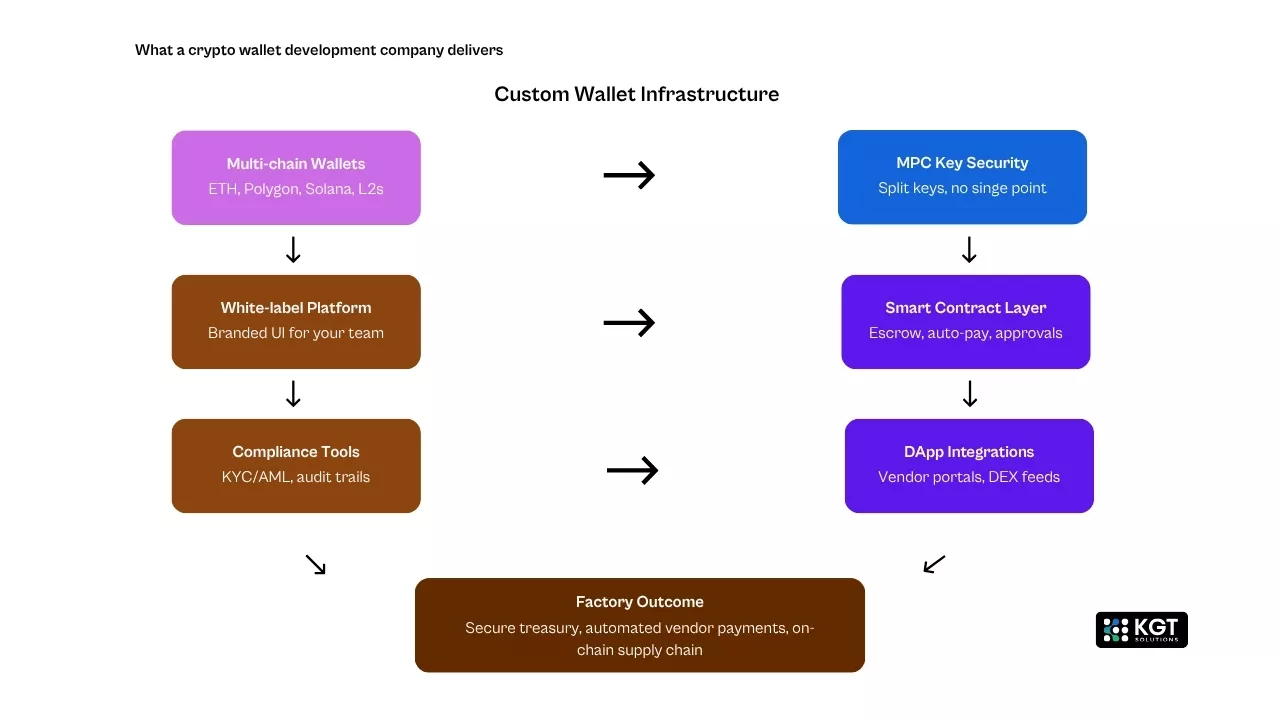
This is where things get practical. A good wallet development partner doesn't hand you a mobile app with a seed phrase. They build multi-chain wallets that let your treasury team manage Ethereum, Polygon, Solana, and whatever chain your DeFi lending protocol sits on, all from one interface. They implement MPC-based security that splits private keys across multiple servers so no single breach compromises your funds. And they deliver white-label platforms your finance team can use without understanding cryptographic key pairs.
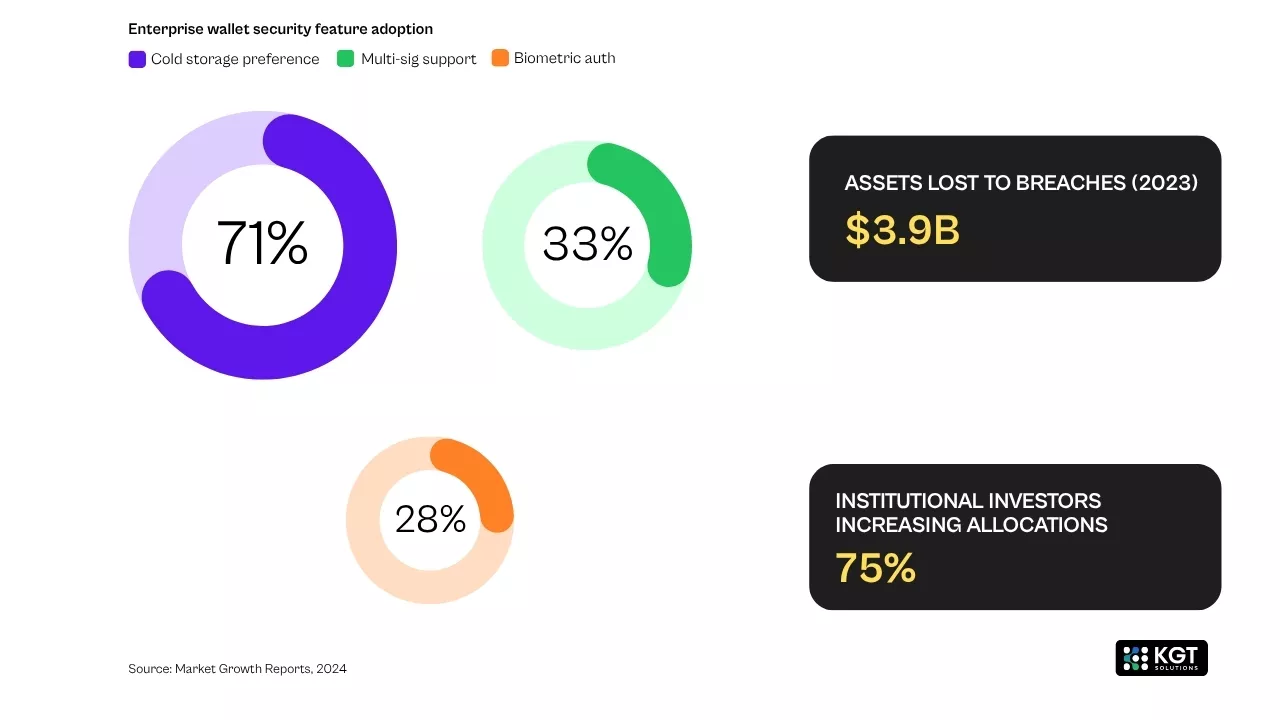
According to Market Growth Reports, over 71% of high-net-worth crypto holders prefer hardware wallets or advanced custody solutions for cold storage. That same security-first mindset applies to industrial treasury management.
How smart contract development companies fit into the picture
You can't talk about crypto wallets without talking about smart contracts. Every automated payment, every escrow arrangement with a supplier, every tokenized purchase order runs on smart contract logic.
Smart contract development companies write and audit the code that makes your wallet do more than store coins. They build automated vendor payments triggered by delivery confirmation, multi-signature approval flows for large transactions, and time-locked escrow for milestone-based manufacturing deals.
According to an Institutional Investor survey from March 2025, 75% of institutional investors planned to increase digital asset allocations that year. Factories that tokenize receivables or use stablecoin settlements need smart contract infrastructure that works
Blockchain development services your factory should know about
Blockchain services cover everything from building private chains for supply chain tracking to integrating public blockchain data into existing manufacturing systems. Custom blockchain development can create a permissioned network where your suppliers, logistics partners, and finance team share a single source of truth for orders and payments. No more reconciling spreadsheets across three time zones.
According to Statista, crypto user penetration reached 11.95% in 2025 and is projected to hit 12.63% in 2026. As more of your business network moves on-chain, the cost of staying off-chain increases.
A Web3 development company can extend this by building dApps on top of your wallet infrastructure, like supplier portals where vendors submit invoices as on-chain transactions, or procurement dashboards pulling live pricing from decentralized exchanges.
MVP Development Company: How Founders Choose Right

Security isn't optional: why wallet architecture matters
Security risk is consistently underestimated. In 2023, over $3.8 billion in digital assets were lost to security breaches, according to Market Growth Reports. That figure should scare any CFO considering a DIY wallet approach.
A proper wallet development company implements layered security: biometric authentication, MPC key management, hardware security modules, and regular smart contract audits. Around 28% of new hardware wallet devices released in 2024 included biometric recognition, and 33% of institutional wallets supported multi-signature capabilities. For a factory managing seven-figure treasury positions in stablecoins, these aren't luxury features.
Blockchain development solutions built for enterprise also include compliance layers: KYC/AML screening in wallet onboarding, transaction monitoring that flags unusual patterns, and audit trails that satisfy regulators.
How emerging technology solutions connect to wallet strategy
Crypto wallets don't exist in isolation. The factories getting real value connect wallet infrastructure to broader technology stacks. Web3 application development ties wallet functionality to procurement platforms, inventory systems, and payment portals.
Crypto token development services let manufacturers create tokens for loyalty programs, vendor incentives, or equipment leasing secured by tokenized assets. A DApp development company can build specialized tools for tracking goods and settling payments at each production stage.
Some manufacturers also use XR development services alongside blockchain, storing training certifications as verifiable tokens managed through the same wallet infrastructure.
Choosing the right partner
Not every blockchain firm understands manufacturing. When evaluating a crypto wallet development company, look for teams that have built enterprise-grade custody solutions, not consumer apps. Ask about multi-chain architecture, key management approaches, and experience with regulated industries.
Partners who also offer Web3 services can build more integrated systems. Those with experience in advance tech solutions across blockchain and emerging platforms are more likely to anticipate where things are heading. According to Business Research Insights, the top 10 wallet providers control roughly 55% of the market, which means there's plenty of room for custom solutions built around your workflows.
So, should you build or keep waiting?
The crypto wallet market is growing from $12.20 billion in 2025 to a projected $98.57 billion by 2034. Factories that treat wallet infrastructure as an afterthought will keep bleeding money on slow cross-border payments and insecure asset management. A crypto wallet development company builds the infrastructure that fits how manufacturing businesses actually operate. That's worth investing in now.
Frequently Asked Questions
Why would a factory need a crypto wallet development company?
How do crypto wallets improve supply chain payments in manufacturing?
What security features should a factory look for in a crypto wallet solution?
Can crypto wallets integrate with existing factory management systems?
What is the cost of developing a custom crypto wallet for industrial use?
Sources:
Fortune Business Insights, "Crypto Wallet Market Size, Share | Industry Report [2025-2032]" (fortunebusinessinsights.com)
Crypto.com, "Global Cryptocurrency Ownership Reaches 741 Million in 2025," February 2026 (crypto.com)
Market Growth Reports, "Cryptocurrency Hardware Wallet Market Size," March 2026 (marketgrowthreports.com)
Statista, "Crypto users worldwide 2016-2025," March 2026 (statista.com)
Business Research Insights, "Crypto Wallet Market Size, Share & Analysis 2035 Report," March 2026 (businessresearchinsights.com)
Institutional Investor Digital Assets Survey, March 2025 (cited via Fortune Business Insights)
Stay Ahead of Systems Innovation
AI-first SaaS, Web3, and XR insights covering systems, product thinking, and technologies that move from idea to production.