Before You Build AI Automation, Read This First


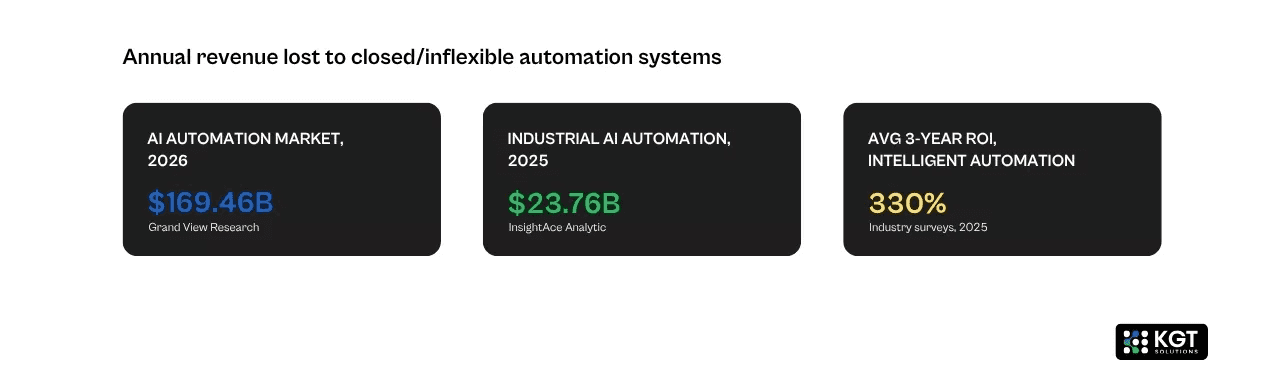
Most companies jumping into this space right now are making the same mistake: they're automating processes they don't fully understand. A team gets excited about a new tool, plugs it into a messy workflow, and six months later wonders why nothing improved. The global market hit $169.46 billion in 2026, growing at a 31.4% CAGR (Grand View Research). Money is pouring in. But spending and succeeding are two very different things.
MIT's State of AI in Business 2025 report found that 95% of generative AI pilots failed to deliver measurable impact on the P&L. That number should make anyone pause before buying another subscription.
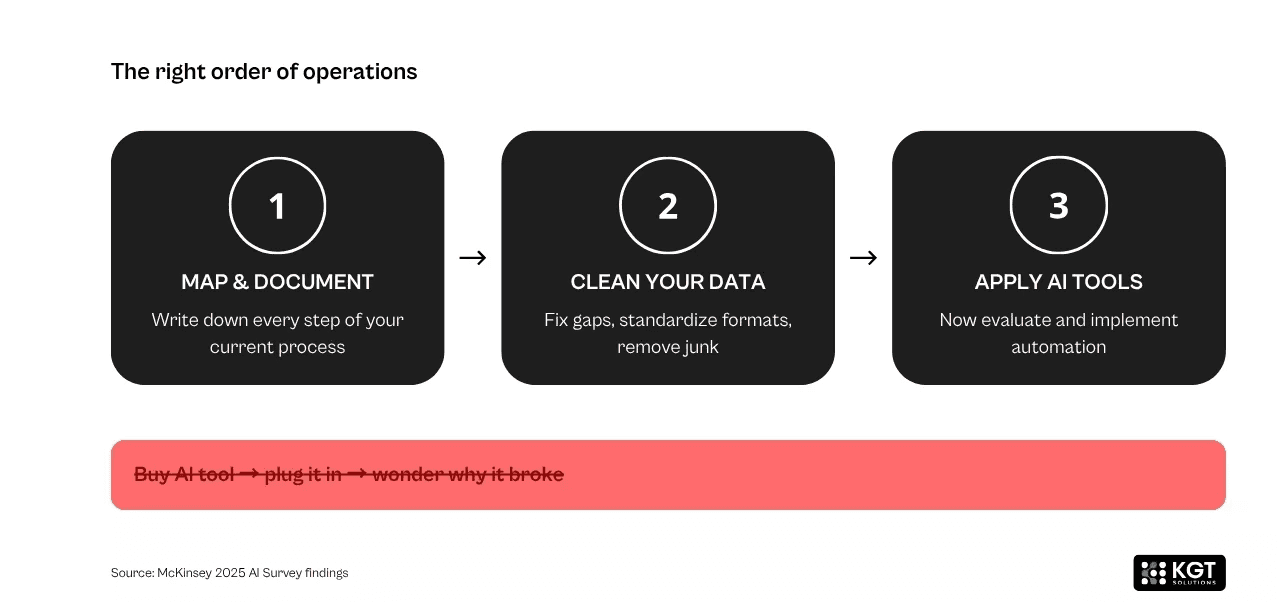
Before building AI automation, you need to map, document, and manually run your processes first. The goal is to move from manual, repetitive, boring tasks to streamlined workflows, making sure automation amplifies what already works rather than scaling what's broken.
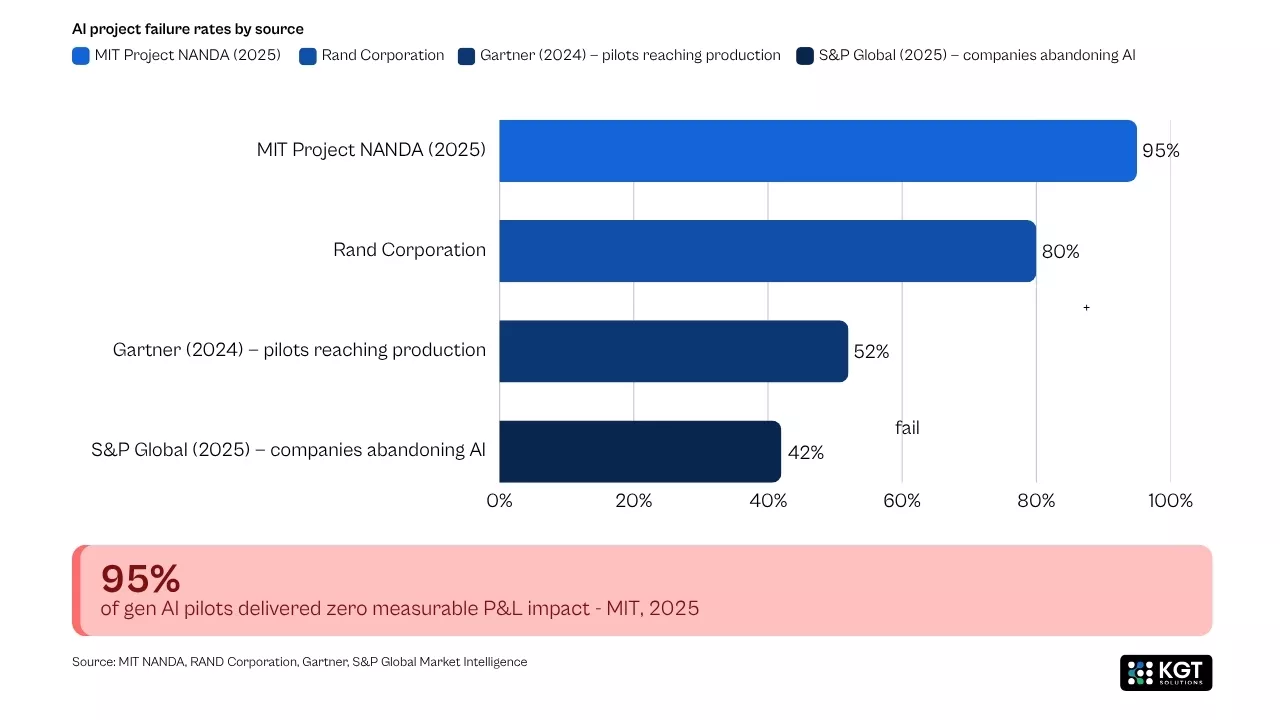
Why most AI automation projects fail
The failure rate is hard to ignore. S&P Global's 2025 survey of over 1,000 enterprises found that 42% of companies abandoned most of their AI initiatives that year, up from just 17% in 2024. RAND Corporation research puts the broader project failure rate at over 80%, roughly double the failure rate of non-AI technology projects.
So what's going wrong? It isn't the technology. The bottleneck sits further upstream: unclear goals, bad data, and disorganized processes. Informatica's CDO Insights 2025 survey pinpointed the top obstacles: data quality and readiness (43%), lack of technical maturity (43%), and shortage of skills (35%). When your data is a mess, automating it just gives you faster mess.
Map your process before you automate it
Forget the software for a week. Grab a whiteboard. Write down every step of the process you want to automate, who does it, what tools they touch, where things get stuck. This is boring work, and that's precisely why people skip it.
McKinsey's 2025 survey found that organizations reporting significant financial returns were twice as likely to have redesigned end-to-end workflows before selecting any modeling technique. They didn’t bolt AI onto a broken process. They fixed the process first.
Of the 88% of organizations using AI in at least one business function in 2025 (up from 55% in 2023), only about one-third managed to scale it across their organization. The execution gap is where money disappears.
What should you automate first?
Not everything deserves AI. Start with tasks that are manual, high frequency, and low judgment. Examples: data entry, invoice processing, scheduling, ticket routing.
MIT’s research backs this up: the biggest ROI from generative AI showed up in back-office work, not in sales and marketing where most companies concentrate their budgets.
- AI document automation: pulling data from contracts at speeds no human team could match
- Automated financial reporting: cutting the close cycle from weeks to days
- Deloitte reports: up to 80% of transactional finance and accounting work can be automated with RPA and AI
If a task is boring, repetitive, and rule-based, it's a candidate. If it requires nuanced judgment, keep a human in the loop.
AI in industrial automation works the same way
Factory floors face similar challenges. AI in industrial automation was valued at $23.76 billion in 2025, growing at 18.8% CAGR through 2035 (InsightAce Analytic).
Key use cases: predictive maintenance and quality control.
But a predictive maintenance model trained on incomplete sensor data will miss failures and trigger false alarms. An AI automation engineer still needs clean data, calibrated sensors, and clear definitions of “failure”.
Agentic Orchestration Explained for Enterprise CTOs

Picking the right help
AI automation consulting is booming. Some firms are excellent. Others sell you a six-figure strategy deck and leave you with a PowerPoint and no working system.
Good consultants: ask about your current processes before mentioning technology, want to see your data, ask uncomfortable questions about quality and team readiness.
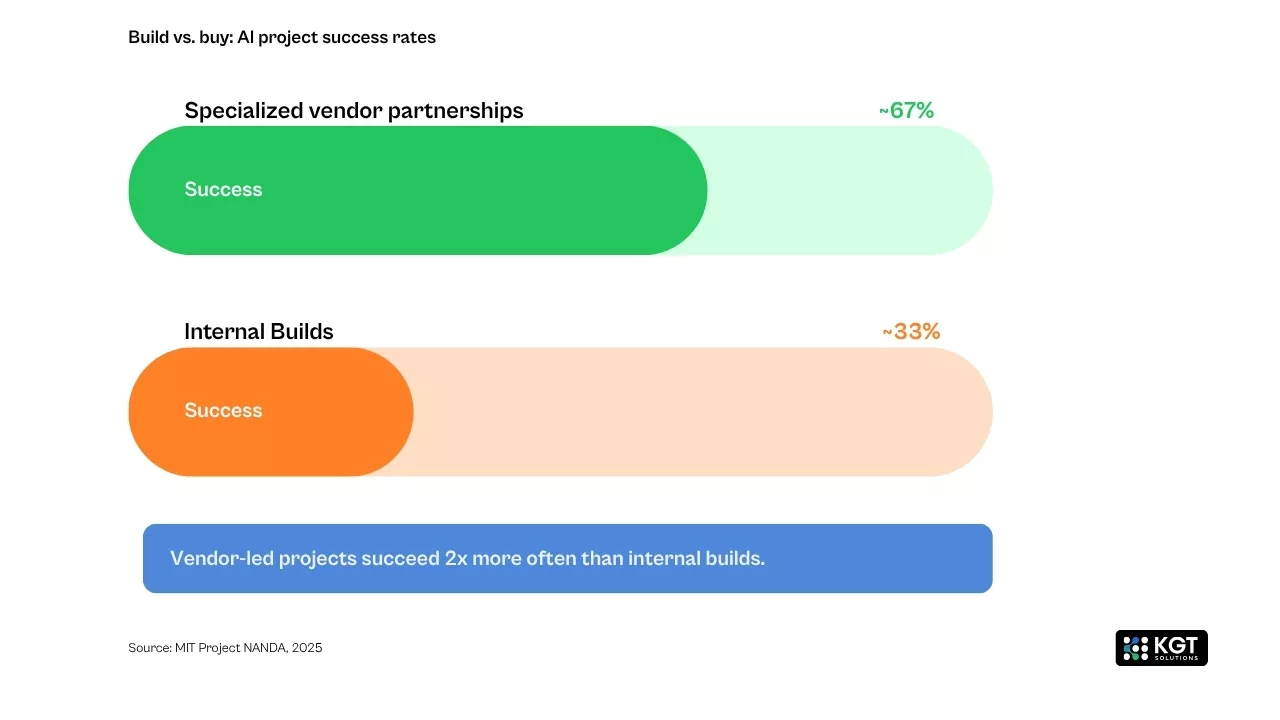
MIT’s study found:
- Companies using specialized vendors/partnerships succeeded 67% of the time
- Companies building internally succeeded only 33% of the time
- Successful firms invested 50–70% of their timeline on data readiness before touching a model
Getting started without overcommitting
Pick one process. Not your most complex one. Something contained, measurable, and annoying.
Steps: document every step as it works today, measure how long it takes, how often it fails, what it costs, clean the data, then evaluate tools.
In 2025, 84% of organizations reported positive ROI from AI investments, with an average 330% return over three years. But that ROI came from disciplined implementations, not moonshot experiments.
Whether you’re looking at AI home automation for products or enterprise workflows, the principle holds:
Get your processes right. Get your data right. Start small. Measure everything. Scale what works.
Frequently Asked Questions
What should businesses evaluate before building AI automation systems?
What are the most common mistakes companies make when implementing AI automation?
How much does it cost to build a custom AI automation system?
Do you need a data science team to implement AI automation?
How long does it take to see results from AI automation?
Sources:
Grand View Research, AI Automation Market Size & Share Report, 2033 (2026)
MIT Project NANDA, The GenAI Divide: State of AI in Business 2025 (2025)
S&P Global Market Intelligence, Enterprise AI Survey (2025)
RAND Corporation, AI Project Failure Analysis
Informatica, CDO Insights Survey (2025)
McKinsey & Company, Global AI Survey (2025)
InsightAce Analytic, AI in Industrial Automation Market Report (2026)
Deloitte, State of AI in the Enterprise (2026)
Protocol AI Newsletter
Practical insights on AI, automation, and intelligent systems focused on real-world applications, not hype.