Do You Really Need AI Agents?

AI agents are autonomous software systems that perceive data, make decisions, and execute multi-step tasks without constant human input. Every enterprise leader faces the same question in 2026: deploy now, or risk falling behind. The answer depends less on the technology and more on whether your operations have the right problem to solve.
Key Takeaways
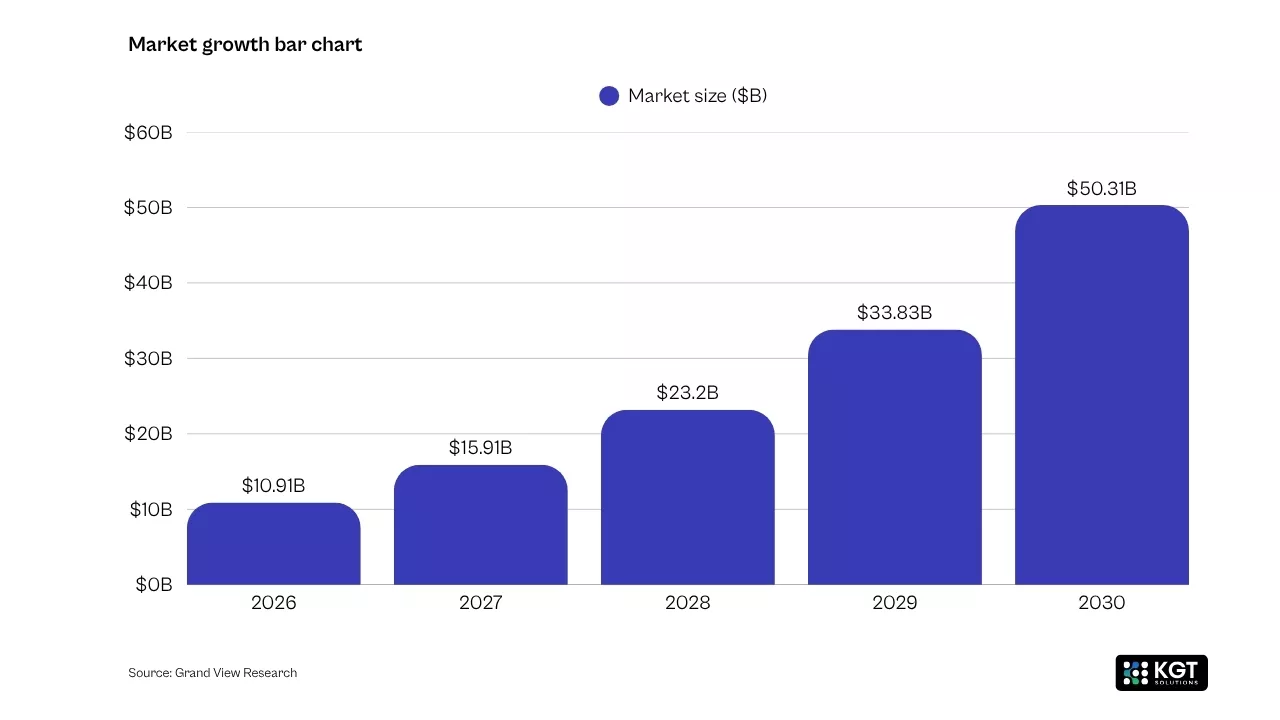
The global AI agents market hit $10.91 billion in 2026, growing at a 45.8% CAGR toward $50.31 billion by 2030 (Grand View Research).
Enterprises report an average ROI of 171% on agentic AI deployments, with U.S. companies averaging 192% (Landbase).
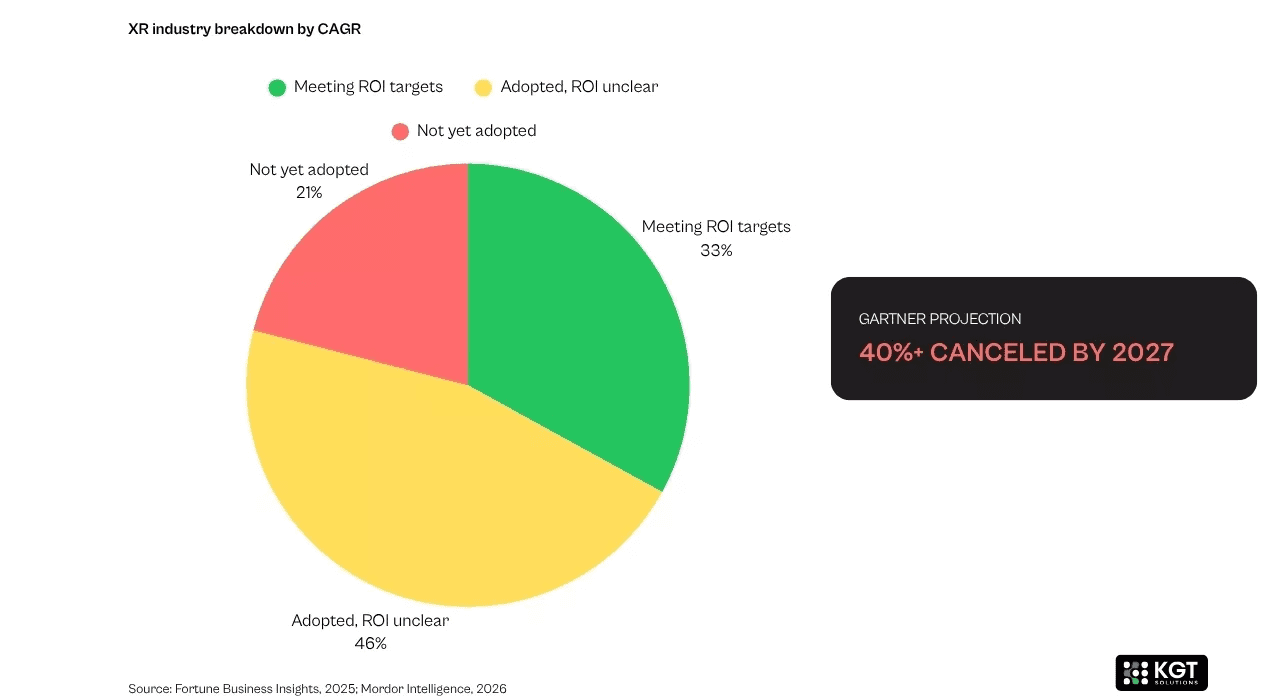
Gartner expects 40%+ of agentic AI projects to be canceled by end of 2027, proving that throwing money at agents without a clear operational bottleneck wastes budget
fast.
Introduction
Half the boardrooms in your industry are debating AI agents right now. The other half already deployed them.
Only 33% of corporate AI initiatives are meeting their ROI targets. That gap between hype and results is where most companies bleed cash. When do agents earn their keep, and when do they drain resources you cannot afford to lose?
What Are AI Agents and Why Does Every Vendor Want to Sell You One?
AI agents combine large language models with tool access, memory, and planning to complete tasks across systems autonomously. Unlike traditional automation that follows rigid scripts, agents adapt based on context, learn from feedback, and chain actions together without waiting for human approval at each step.
Robotic process automation follows a flowchart. Agents build their own flowchart, then execute it. That flexibility is why 51% of enterprises have agents in production as of 2026, with another 23% actively scaling.
But flexibility also means unpredictability. A rule-based bot fails the same way every time, making debugging simple. An agent reasoning through a procurement workflow might find a creative shortcut one day and a creative disaster the next.
When AI Agents Are Worth the Investment
AI agents deliver measurable returns when they replace high-volume, multi-step workflows that bottleneck on human decision-making speed. The sweet spot sits where tasks are too complex for rule-based RPA but too repetitive for your best engineers to spend time on.
The numbers make the case:
Scenario | Without AI Agents | With AI Agents |
|---|---|---|
Customer support resolution | 12-minute avg handle time | 84% auto-resolution rate (Salesforce Agentforce, 380K+ interactions) |
Return per $1 invested | Baseline | $3.50 average, top performers hit 8x |
Enterprise app integration | Manual workflows across 5+ systems | 40% of enterprise apps embedding task-specific agents by end of 2026 (Gartner) |
Operations and Manufacturing
Agentic systems in manufacturing handle predictive maintenance scheduling, quality inspection routing, and supply chain exception management across connected platforms. Plants running agent-based predictive maintenance report 25-30% reductions in unplanned downtime because the system monitors sensor data, cross-references maintenance logs, and schedules interventions before failures cascade.
93% of IT leaders have implemented agentic systems or plan to within two years. But the keyword is "plan." Planning and deploying are different budgets entirely.
Back-Office and Shared Services
Agentic workflows in finance, HR, and procurement automate invoice matching, employee onboarding, and vendor risk scoring by pulling data from multiple enterprise systems simultaneously. CFOs and procurement directors see the fastest payback when autonomous agents handle repetitive cross-system lookups that currently eat analyst hours.
ROI compounds over time: 41% return in year one, 87% in year two, 124%+ by year three. Agents get better because they learn your data patterns. But your team still has to survive the implementation dip in year zero, and that dip kills more projects than the technology ever does.
Enterprise AI Governance: Build Your Framework

When AI Agents Are a Waste of Money
Agentic deployments waste budget when aimed at problems that lack structured data, clear success metrics, or sufficient transaction volume to justify integration cost. If your process runs ten times a week and a junior analyst handles it in twenty minutes, an agent is an expensive toy.
Three red flags:
Your data lives in spreadsheets and email threads, not connected systems. Agents need API access. No APIs, no agents.
You cannot define what "success" looks like in measurable terms. If the team cannot agree on the KPI an agent should improve, you are building automation before you are ready.
Leadership wants agents because competitors have them. 79% of organizations report some level of agentic AI adoption, but Gartner projects 40%+ of those projects will be scrapped by 2027. Following the herd into a failed deployment is worse than waiting six months.
How much does agent development cost for mid-market enterprises?
Agent development for mid-market enterprises typically ranges from $50,000 to $250,000 depending on integration complexity and the number of connected systems. Custom AI solutions with narrower scope and clear ROI targets consistently outperform expensive platform-wide rollouts.
Can autonomous agents replace my existing RPA workflows?
Autonomous agents augment rather than replace RPA in most production environments. RPA handles deterministic, rule-based tasks at scale while agents manage exception handling, decision branching, and cross-system reasoning that RPA cannot.
What is the biggest risk of deploying agents too early?
Agent deployment without governance infrastructure creates compliance exposure, since 80% of organizations deploying agents in 2026 lack mature governance models. Autonomous systems making decisions across financial, HR, or procurement workflows without audit trails put the entire operation at risk.
Frequently Asked Questions
What business problems are AI agents best suited to solve?
When should a business skip AI agents and use simpler automation instead?
What is the minimum company size or budget needed for AI agents?
How long does it take to see ROI from AI agent implementations?
What are the risks of adopting AI agents too early?
Conclusion
Stop asking whether you need AI agents. Ask whether you have a $500K+ operational bottleneck, connected data systems, and a team ready to manage autonomous workflows.
If yes, deploy with a specific use case. If no, fix the foundation first.
Sources:
Grand View Research - AI Agents Market Size
Gartner - 40% Enterprise App Embedding Forecast
Landbase - Agentic AI ROI Statistics
Salesforce Agentforce - 84% Resolution Rate
Fortune Business Insights - Agentic AI Market Forecast
MEV - Agentic AI Market Outlook 2025-2026
Protocol AI Newsletter
Practical insights on AI, automation, and intelligent systems focused on real-world applications, not hype.