2M Jobs Unfilled by 2030: Industrial Automation Fill the Gap

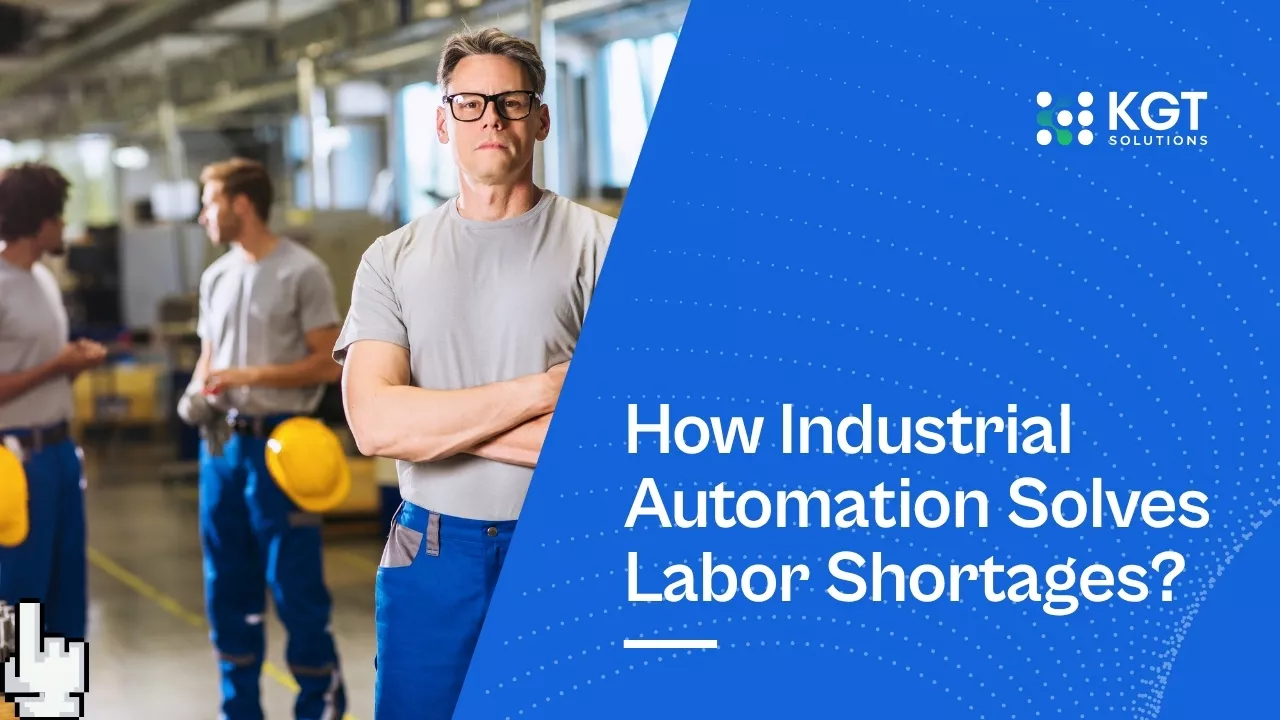
Manufacturing faces 2 million unfilled jobs by 2030 and only 14% of Gen Z will consider plant work. Automation is not optional, it is the workforce.
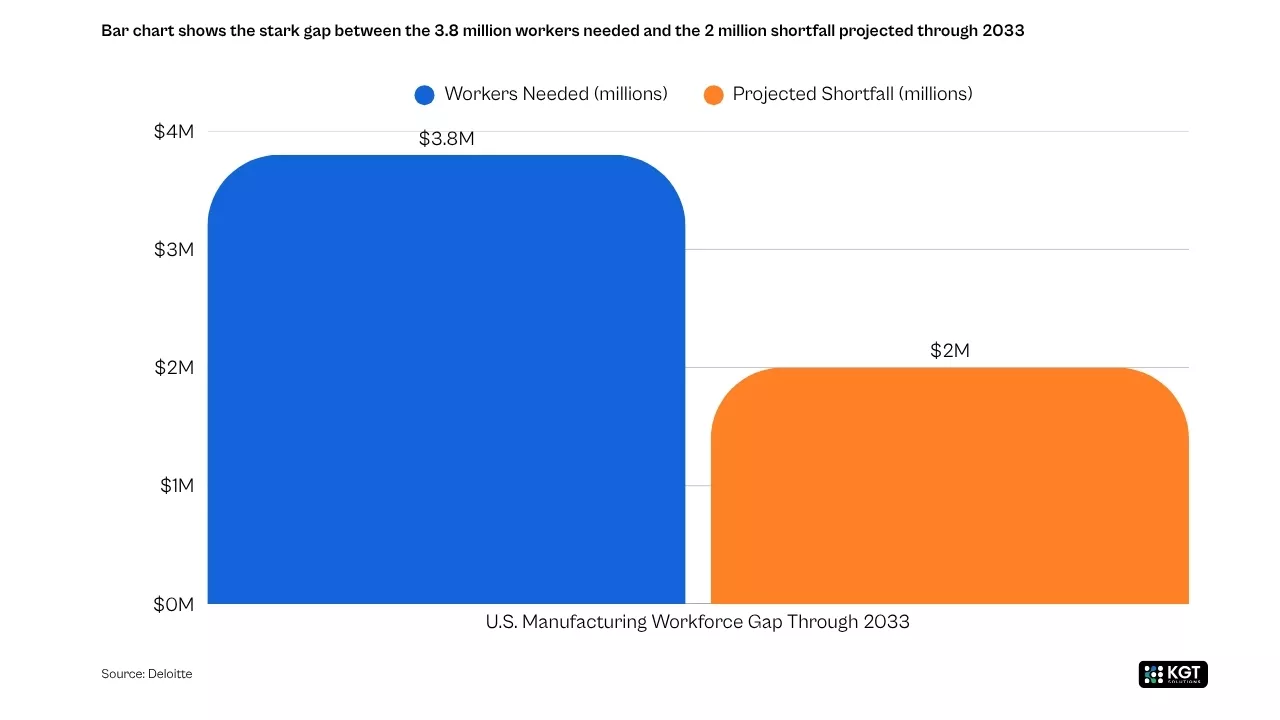
The manufacturing sector can't find enough people. Nearly 2 million jobs could go unfilled by the end of the decade, according to Deloitte and The Manufacturing Institute. Meanwhile, 26% of the current workforce is expected to retire by 2030 (ManufacturingTomorrow). Industrial automation is how companies keep production running despite these gaps.
This isn't about replacing workers with machines. It's about what happens when there aren't enough workers to begin with.
Why the labor shortage isn't going away
By 2030, manufacturing could have 2 million jobs nobody wants. Only 14% of Gen Z will even consider working in a plant.
The numbers are stubborn. In Q3 2025, manufacturers reported an average of 4.2% of roles unfilled, with nearly a quarter of companies facing vacancy rates above 5% (NAM). Factory employment dropped by over 70,000 between April and December 2025, hitting 12.69 million, the lowest reading since March 2022 (BLS data via ManufacturingTomorrow).
Only 14% of Gen Z workers say they'd consider industrial work as a career (Kardex). The U.S. fertility rate has fallen 20% since 2007 to 1.64 births per woman, well below replacement level (CDC). The pipeline of young workers entering factories is thinning, and it won't reverse on its own.
How industrial automation fills workforce gaps
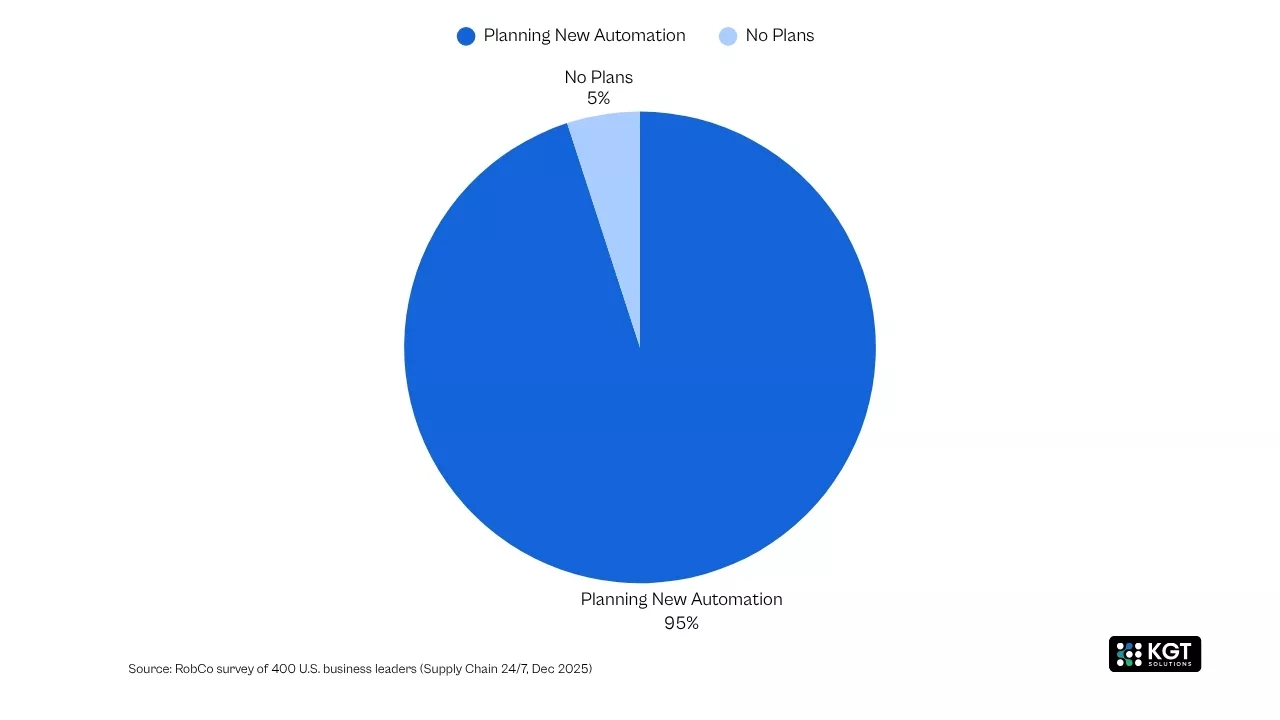
95% of industrial companies plan new automation deployments within three years. The market reaches $250B in 2026, growing at 9.6% yearly.
Automated systems enable manufacturers to maintain output with fewer workers by using programmable logic controllers, robotics, and sensor-driven tools to handle repetitive, physically demanding, or precision-critical tasks.
The global market was valued at roughly $227 billion in 2025 and is projected to reach $250 billion in 2026, growing at a 9.6% CAGR through 2033 (DataM Intelligence). A RobCo survey of 400 U.S. business leaders found that 95% of industrial companies plan to deploy new automation within three years (Supply Chain 24/7). Among those already running automated systems, more than half reported measurable productivity gains.
Collaborative robots, or cobots, are central to this shift. Unlike traditional robots that need safety cages, cobots work alongside people, handling lifting, sorting, and repetitive motions while operators manage decisions and exceptions. Cobot sales reached an estimated 735,000 units globally in 2025 (Scoop Market). More than 42% of small and midsize manufacturers adopting automation in 2025 chose cobots specifically (Global Growth Insights).

What industrial IoT development services bring to the floor
60% of manufacturers now run IoT devices for live monitoring, and most are seeing unplanned downtime drop by up to 30%.
Hardware alone doesn't close the gap. The real gains come when machines talk to each other. Industrial IoT solutions connect sensors, controllers, and production monitoring systems into a single data layer, giving operators visibility across the entire line.
About 60% of manufacturers now use IoT-connected devices for real-time monitoring and control (Global Growth Insights). These industrial control systems track temperature, pressure, vibration, and throughput continuously, catching anomalies before they become breakdowns. Industrial AI solutions for predictive maintenance cut unplanned downtime by up to 30%, according to data from Siemens and ABB (SkyQuest).
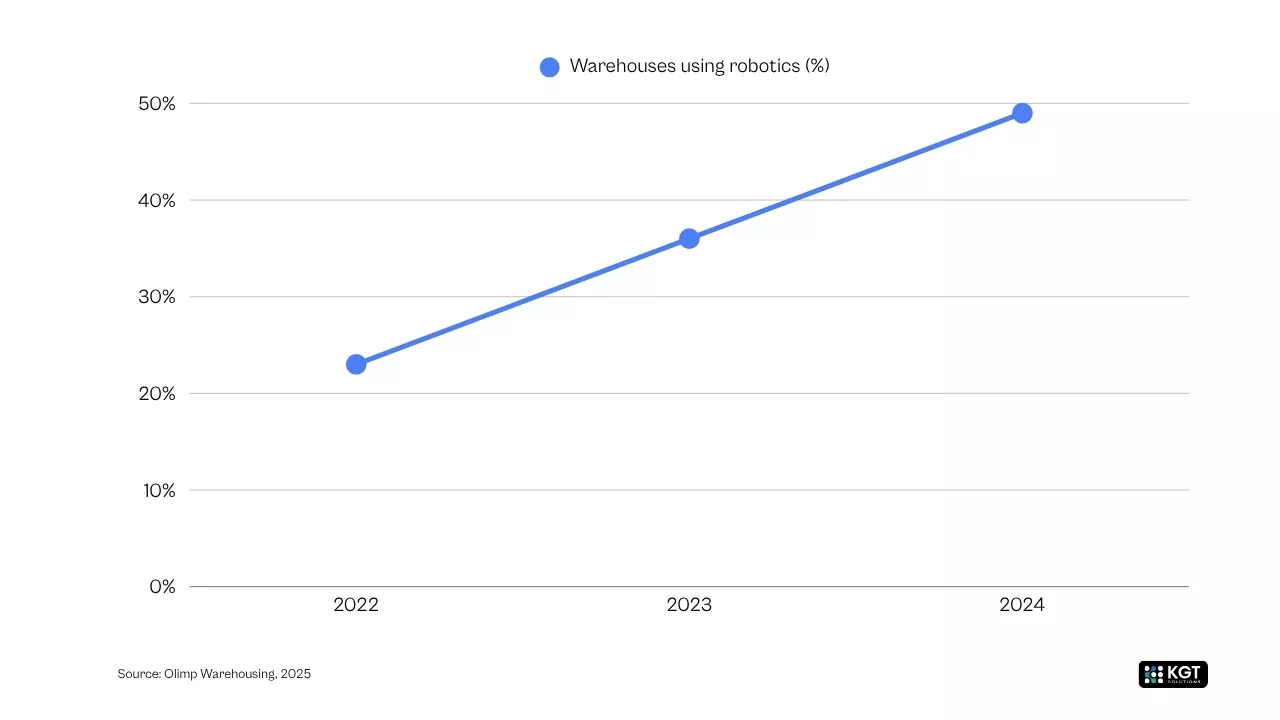
In warehouse automation, IoT-connected autonomous mobile robots adjust routes based on real-time demand. By 2024, nearly half of surveyed warehouses used some form of robotics, up from 23% in 2022 (Olimp Warehousing). Digital twin software lets companies simulate entire production lines before committing physical resources, cutting integration time and risk.
Where automation PLC programming makes the difference
68% of industries depend on PLC and SCADA for process control. The problem? 55% can not find trained people to run them.
Programmable logic controllers remain the backbone of automated manufacturing, managing everything from conveyor speeds to robotic arm sequences in real time.
Around 68% of industries rely on PLC and SCADA systems for process control (Global Growth Insights). But here's the catch: roughly 55% of companies report difficulty finding trained professionals to operate these systems. Manufacturers need automation because they can't find workers. They also need workers to run the automation. That tension isn't going away.
The companies solving this are investing in production monitoring systems with simpler interfaces. ABB's lead-through programming for cobots lets welders guide the robot arm by hand rather than writing code. That addresses both the labor shortage and the skill gap at once.
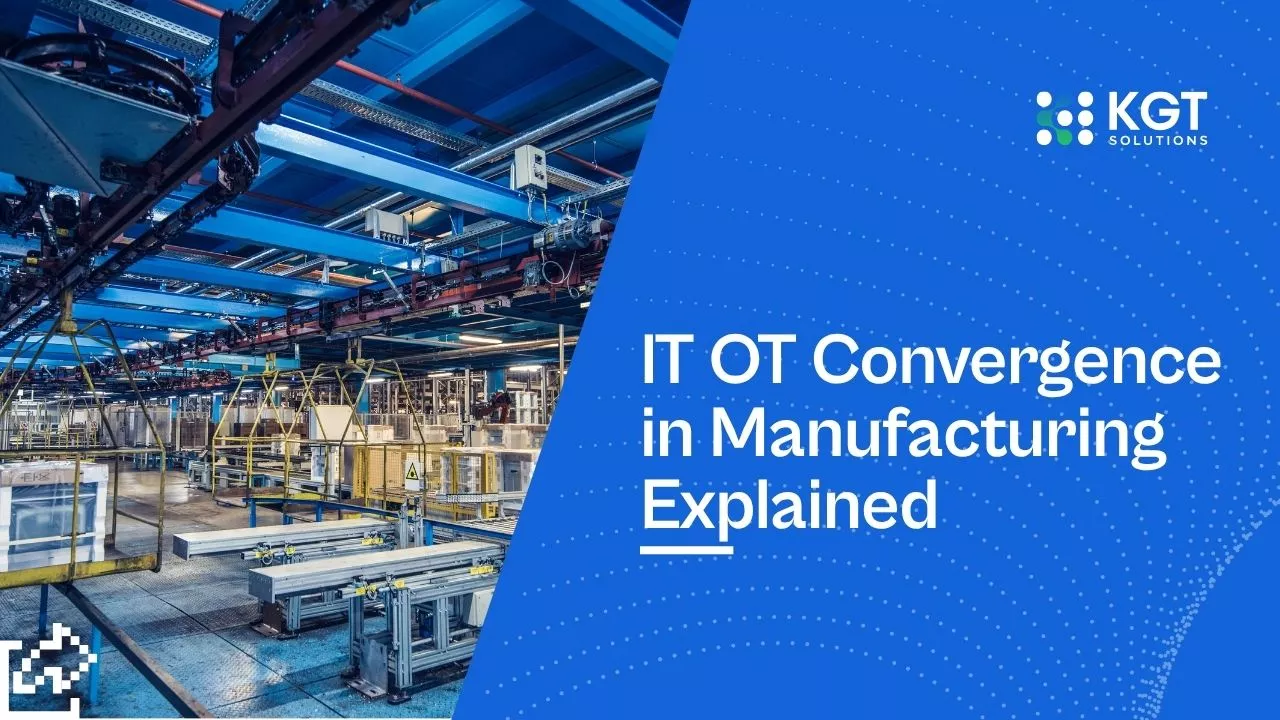
IT OT Convergence in Manufacturing Explained
The actual impact on workers still on the floor
58% of workers actually like automation. 43% of companies say workloads got lighter and morale went up after deploying it.
58% of employees and 55% of unions view automation positively, and 43% of companies report lighter workloads and better morale after deployment (Supply Chain 24/7).
Fleet Feet doubled fulfillment productivity with fewer staff after adding collaborative AMRs. UPS uses flexible robotic fleets to scale during peak seasons without permanent headcount increases. Sensor-driven automation is also extending beyond manufacturing into adjacent fields. Tyre pressure monitoring in fleet logistics, wireless surveillance systems in remote facilities, and sensor networks for elderly care all rely on the same underlying logic: use machines to compensate where people are scarce.
Workers aren't being displaced. They're moving to tasks that need judgment, troubleshooting, and decision-making, while machines cover the repetitive work that nobody wanted and nobody was available to do.
What comes next
Industrial robots will own 56% of the automation market by 2035. AI cobots already account for 15% of new installs in 2025.
The industrial robots segment is projected to capture 56% of the automation market by 2035 (Research Nester). AI-enabled cobots now account for 15% of new robotic installations in 2025, and that share is climbing (Global Growth Insights). The Robotics-as-a-Service model is lowering barriers for smaller manufacturers who can't absorb large capital outlays. And the integration of robotic process automation (RPA) services with physical automation is blurring the line between floor-level robotics and back-office workflow.
The companies adapting fastest aren't necessarily the biggest. They're the ones treating automation as a workforce strategy, not a line item.
Frequently Asked Questions
How serious is the manufacturing labor shortage in 2026?
Can industrial automation fully replace human workers on the factory floor?
What types of automation best address labor shortages in manufacturing?
How quickly can automation offset workforce gaps in a plant?
What does industrial automation cost compared to hiring and training new workers?
Sources:
Deloitte and The Manufacturing Institute
ManufacturingTomorrow
National Association of Manufacturers (NAM)
U.S. Bureau of Labor Statistics (BLS)
Kardex
CDC
DataM Intelligence
Supply Chain 24/7
Scoop Market
Global Growth Insights
SkyQuest
Olimp Warehousing
Research Nester
Industrial Autonomous Floor
Newsletter
Actionable insights on industrial AI, automation, and smart operations built for safe, secure, and compliant real-world environments.