Digital Twin Manufacturing: Plant Guide (2026)

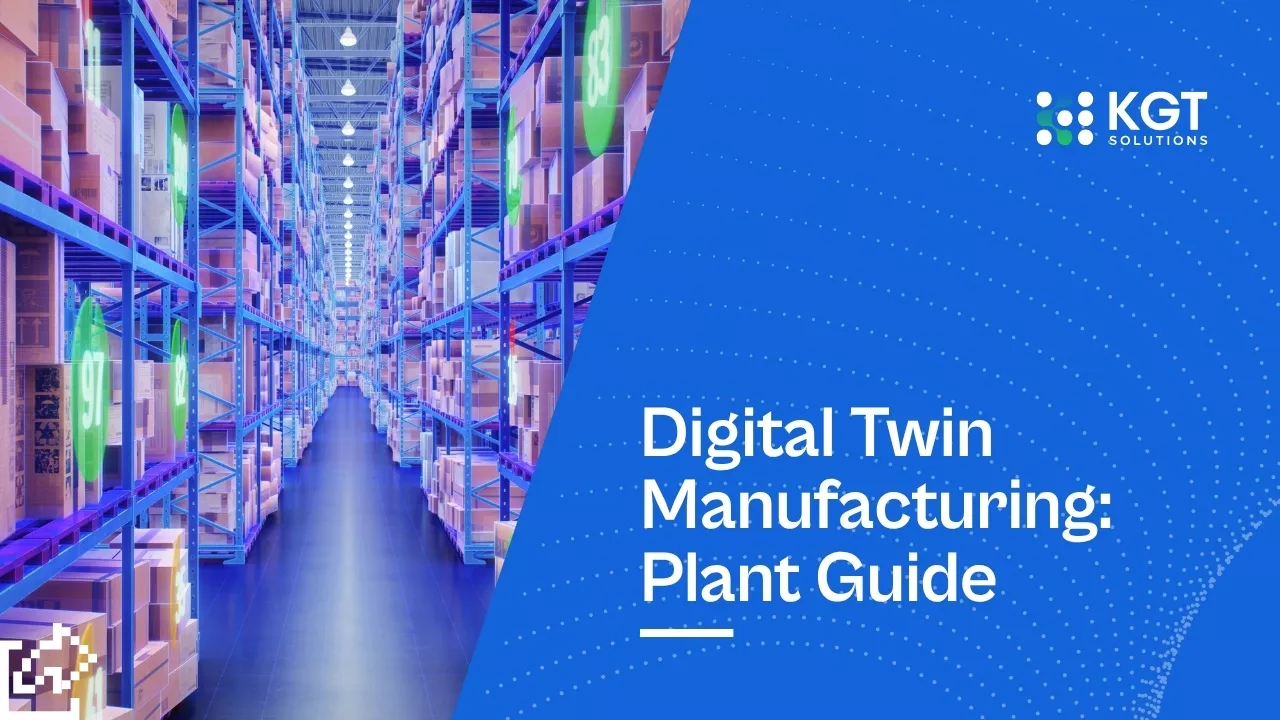
Digital twin manufacturing uses virtual replicas of physical assets to predict failures, optimize output, and cut unplanned downtime by up to 50%.
If you're a plant manager or VP of Operations weighing a six-figure digital twin investment, you need more than vendor hype. You need architecture options, real ROI numbers, and a clear picture of what it takes to get sensors talking to software. This guide covers all of it - twin types, IoT integration, vendor evaluation, implementation timelines, and where construction industry crossover creates unexpected value.
McKinsey estimates that digital twins can reduce maintenance costs by 10-40% and increase equipment uptime by 10-20%. Those numbers make the business case, but only if you pick the right architecture for your plant.
Key Takeaways
Plant managers evaluating digital twin manufacturing should understand three twin types (product, process, system), budget 6-18 months for full deployment, and expect 15-30% reductions in unplanned downtime within the first year. Vendor selection between Siemens, PTC, ANSYS, Dassault, GE Digital, and Azure Digital Twins depends on your existing OT stack and integration needs. IoT sensor density, SCADA connectivity, and PLC compatibility determine 60% of implementation success - not the software itself.
What Is Digital Twin Manufacturing and Why Does It Matter?
Digital twin manufacturing creates a real-time virtual model of your physical plant, machines, and production processes.
The virtual model ingests live sensor data, runs simulations, and flags problems before they cause downtime. It's not a 3D rendering sitting on someone's laptop. It's a living, breathing data layer connected to your actual equipment.
Gartner reports that 75% of organizations implementing IoT already use or plan to use digital twins by 2027. The manufacturing sector leads adoption because the ROI is measurable. A discrete manufacturing plant running a process-level digital twin typically sees 20-35% fewer quality defects within 12 months, according to Deloitte's 2025 Smart Factory report.
But here's what vendor decks won't tell you. The twin itself is maybe 30% of the work. The other 70% is getting your data infrastructure right - sensors calibrated, SCADA systems connected, historians feeding clean data. If your OEE tracking is already messy, a digital twin will just give you a prettier view of bad data.
Three Types of Digital Twins You Need to Know
Types of digital twins break into three categories: product twins, process twins, and system twins.
Each type solves different problems. Picking the wrong one wastes budget.
Product twins model individual assets - a CNC machine, a turbine, a packaging line. They track wear patterns, predict component failure, and schedule maintenance before breakdowns happen. GE Digital's Predix platform has logged over 1.2 million product twins across its industrial customer base. If your biggest pain is unplanned equipment failure, start here.
Process twins model entire production workflows. They simulate what happens when you change line speeds, shift schedules, or raw material suppliers. Siemens reports that process twins reduced cycle times by 15-25% in automotive assembly plants during 2025 pilot programs. If you're running predictive maintenance but still losing output to process bottlenecks, this is your next move.
System twins combine product and process models into a plant-wide simulation. They're the most expensive and complex to build. But they also deliver the highest ROI - Capgemini found that system-level digital twins generated 2.5x the return of asset-level twins over a three-year period. You'll need clean data across every production line to make this work.

IoT Integration Requirements: Sensors, SCADA, and PLCs
Digital twin manufacturing depends on three data layers: field sensors, SCADA systems, and PLC networks.
This is where most implementations stall. A 2025 IoT Analytics survey found that 58% of digital twin project delays trace back to OT/IT integration challenges - not software issues.
Your sensor layer is the foundation. You'll need vibration sensors, temperature probes, flow meters, and power monitors on every asset the twin will model. Average sensor density for a mid-size manufacturing plant runs 200-500 sensors per production line. Each one needs reliable connectivity - typically MQTT or OPC-UA protocols.
SCADA systems sit one layer up. If your SCADA platform is older than 10 years, plan for middleware. Most digital twin platforms (Siemens MindSphere, PTC ThingWorx, Azure Digital Twins) offer OPC-UA connectors, but legacy Modbus or proprietary protocols need translation layers. Budget $50,000-$150,000 for SCADA integration on a single-site deployment.
PLCs are the trickiest piece. Allen-Bradley, Siemens S7, and Mitsubishi controllers each speak different languages. Your digital twin vendor should demonstrate native PLC connectivity for your specific controllers during the evaluation phase - not promise it for a future release. And if your industrial automation systems already feed into a centralized historian, you're 40% of the way there.
| Vendor | Platform | Best For | Annual Cost | Key Strength |
|---|---|---|---|---|
Siemens | MindSphere + Xcelerator | Siemens hardware plants | $100K+ | Deep OT integration |
PTC | ThingWorx + Vuforia | Multi-vendor environments | $80K-$200K | AR maintenance + multi-PLC |
ANSYS | Twin Builder | Physics simulation needs | $50K-$120K | Thermal/structural modeling |
Dassault | 3DEXPERIENCE | R&D-to-production plants | Contact | Virtual twin simulation |
GE Digital | Proficy + Predix | Heavy industry | Contact | 240+ industrial customers |
Azure | Digital Twins | Custom/cloud-native builds | $30K-$80K | Vendor-agnostic, flexible |

Vendor Evaluation Framework: Six Platforms Compared
Digital twin manufacturing vendors split into OT-native platforms and cloud-first platforms, and the right choice depends on your existing stack.
Here's how the six major players break down for plant-floor use cases.
Siemens (MindSphere + Xcelerator) - Best for plants already running Siemens PLCs and drives. Deep OT integration out of the box. Pricing starts around $100,000 annually for a single-site license. Siemens claims 85% faster time-to-value for existing Siemens hardware customers.
PTC (ThingWorx + Vuforia) - Strong on AR-assisted maintenance and mixed OEM environments. ThingWorx handles multi-vendor PLC connectivity better than most. Expect $80,000-$200,000 for a mid-size deployment. PTC's 2025 customer data shows 30% reduction in mean time to repair.
ANSYS (Twin Builder) - Physics-based simulation is ANSYS's edge. If you need to model thermal, structural, or fluid dynamics behavior, no one does it better. But it's engineering-heavy - you'll need simulation expertise on staff. Licensing runs $50,000-$120,000 per year.
Dassault Systemes (3DEXPERIENCE) - The strongest option for plants that also do product design. Their virtual twin approach ties R&D to production floor data. Best fit for discrete manufacturing with complex product configurations.
GE Digital (Proficy + Predix) - Purpose-built for heavy industry - power generation, oil and gas, large-scale process manufacturing. GE reports 240+ industrial customers running production digital twins. If you run GE turbines or compressors, this is the obvious choice.
Microsoft Azure Digital Twins - Cloud-native, vendor-agnostic, and the most flexible for custom development. Lower upfront cost ($30,000-$80,000 for initial setup), but you'll need a development team. Best for plants building proprietary twin models or integrating with existing Azure infrastructure.
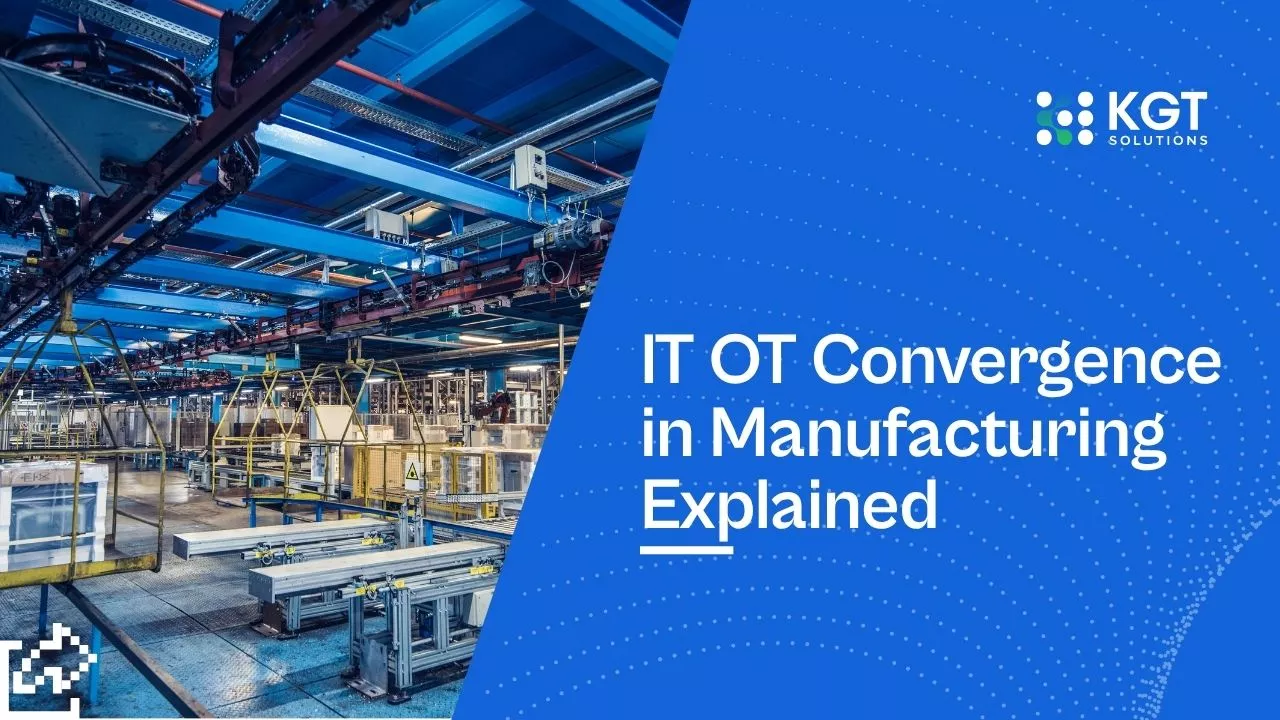
IT OT Convergence in Manufacturing Explained
ROI and Implementation Timelines
Digital twin manufacturing ROI typically hits 150-300% over three years, with payback starting at month 8-14.
ABI Research projects the digital twin market in manufacturing will reach $10.6 billion by 2028. But market size doesn't pay for your implementation. Here's what does.
A mid-size discrete manufacturing plant (200-500 employees) should budget $250,000-$750,000 for a first-phase digital twin deployment. That includes software licensing, sensor installation, SCADA integration, and the consulting hours to build the initial twin models.
Timeline for a typical single-site deployment:
Months 1-3: Assessment, sensor audit, data infrastructure prep
Months 3-6: Pilot twin on one production line (usually highest-value or highest-failure-rate)
Months 6-12: Scale to additional lines, integrate with MES/ERP
Months 12-18: System-level twin, advanced analytics, closed-loop optimization
The gains stack over time. LNS Research found that plants in year two of digital twin operation saw 2x the downtime reduction compared to year one, because the models get smarter as they ingest more data. Year-one benefits center on reactive problem detection. Year-two benefits shift to predictive and prescriptive optimization.
Don't underestimate the people cost. You'll need at least one full-time data engineer and a domain expert who understands your production processes. Outsourcing the build is fine. Outsourcing the ownership isn't.
Digital Twin Construction: Manufacturing Crossover
Digital twin construction applies the same virtual modeling approach to buildings, infrastructure, and facility design.
If your plant is planning expansions or new facility builds, this crossover matters. Dodge Data & Analytics reports that 52% of contractors on projects over $50 million now use some form of digital twin during construction.
The manufacturing connection is direct. A digital twin built during facility construction can become the operational twin once production starts. Autodesk and Bentley Systems both offer BIM-to-digital-twin pipelines that carry building models into production-phase asset management.
For plant managers overseeing capital projects, this means you can simulate production layouts, airflow patterns, utility loads, and material flow before pouring concrete. AECOM reported 18% construction cost savings on a semiconductor fab project by using a system-level digital twin to optimize cleanroom layouts during the design phase. That same twin transitioned into the plant's predictive maintenance platform after commissioning.
The architecture question - virtual twin vs digital twin - comes up here. Virtual twins (Dassault's terminology) emphasize simulation and what-if scenarios. Digital twins emphasize live data and real-time monitoring. For construction, you want virtual twin capabilities. For ongoing operations, you want digital twin capabilities. The best implementations bridge both.
Building Your Business Case for Leadership
Digital twin manufacturing business cases succeed when they tie twin outputs directly to P&L line items leadership already tracks.
Don't pitch "digital transformation." Pitch specific numbers against specific problems.
Frame it around three metrics your CFO already cares about: unplanned downtime cost per hour (average $260,000 for automotive, $180,000 for food and beverage, per Aberdeen Group), maintenance spend as a percentage of replacement asset value (best-in-class is 2-3%, most plants run 4-6%), and OEE improvement potential (every 1% OEE gain equals roughly $50,000-$200,000 annually depending on plant size).
Start with a single production line pilot. A $100,000-$150,000 pilot on your highest-cost failure point gives leadership a proof of concept within six months. GE Digital reports that 78% of customers who complete a pilot proceed to full deployment.
Build your vendor shortlist around your existing OT stack, not feature comparisons. Integration cost is 2-3x the software license cost. Picking a platform that already speaks your PLC language saves more than any feature difference.
]
Frequently Asked Questions
What is the average cost of implementing a digital twin in manufacturing?
How long does it take to deploy a digital twin on a factory floor?
What is the difference between a virtual twin and a digital twin?
Which digital twin platform works best for multi-vendor factory environments?
Do I need to replace my existing SCADA system for a digital twin?
Digital twin manufacturing is a practical investment decision, not a technology experiment. The architecture choices - product, process, or system twins - should follow your biggest operational pain points. Your existing sensor infrastructure, SCADA systems, and PLC environment will determine which vendor platform fits without blowing your integration budget. Start with a bounded pilot on one production line, prove ROI against metrics your CFO already tracks, and scale from there. The plants getting the most value aren't chasing the most advanced features. They're the ones that got their data infrastructure right first.
Sources:
McKinsey & Company - Digital Twins: The Key to Smart Product Development (2025)
Deloitte - Smart Factory Study: Manufacturing Digital Maturity Report (2025)
Gartner - IoT and Digital Twin Technology Adoption Survey (2026)
LNS Research - Digital Twin ROI in Discrete Manufacturing (2025)
ABI Research - Digital Twin Market Forecast: Industrial Applications (2026)
Capgemini Research Institute - Digital Twins in Manufacturing: Scaling Beyond Pilots (2025)
Aberdeen Group - Cost of Unplanned Downtime in Manufacturing (2025)
IoT Analytics - State of Digital Twin Integration Report (2025)
Industrial Autonomous Floor
Newsletter
Actionable insights on industrial AI, automation, and smart operations built for safe, secure, and compliant real-world environments.